
Top Signs You Need Garage Door Service – Don’t Ignore These
Most homeowners wait until a garage door stops working completely before they call anyone. By then, a small mechanical problem has usually turned into a bigger repair. The clearest signs you need garage door service are changes in how the door moves, sounds, or balances: a door that lifts unevenly, a grinding track, an opener that hesitates, or a weatherseal that’s cracked and letting water in. If you’d rather not troubleshoot it yourself, call (866) 937-7969.
Here’s the thing about garage doors: they fail in stages, not all at once. A spring doesn’t snap out of nowhere. It weakens over hundreds of cycles, and the strain shows up elsewhere first – in the opener motor, the tracks, the way the door settles when it closes. The homeowners who catch it early are the ones who noticed something felt different before anything broke.
So instead of a flat list of symptoms, we want to walk you through warning signs by the system they belong to. A garage door has four working systems: springs, tracks and rollers, the opener, and the weatherseal. Knowing which system is talking to you makes the difference between a quick fix and a full replacement.
Key Takeaways
- Uneven lifting or a door that drops hard usually points to spring system wear, not the opener.
- Squealing and grinding are different sounds from different parts and need different fixes.
- An opener that struggles is often reacting to door problems, not failing on its own.
- Deerfield Beach humidity swells wood-composite doors and throws off limit switches.
- A monthly safety reversal test catches dangerous failures before they cause harm.
Spring System Warning Signs: When the Door Stops Lifting Evenly
Spring problems are the most common reason a garage door suddenly won’t open, and they’re also the most dangerous to ignore. Your springs carry the door’s full weight. When they start to weaken, the door feels heavier than it should, and the opener has to work harder to lift it. Three signs point to three different stages of spring failure, so it helps to know which one you’re seeing.
Signs your springs need attention
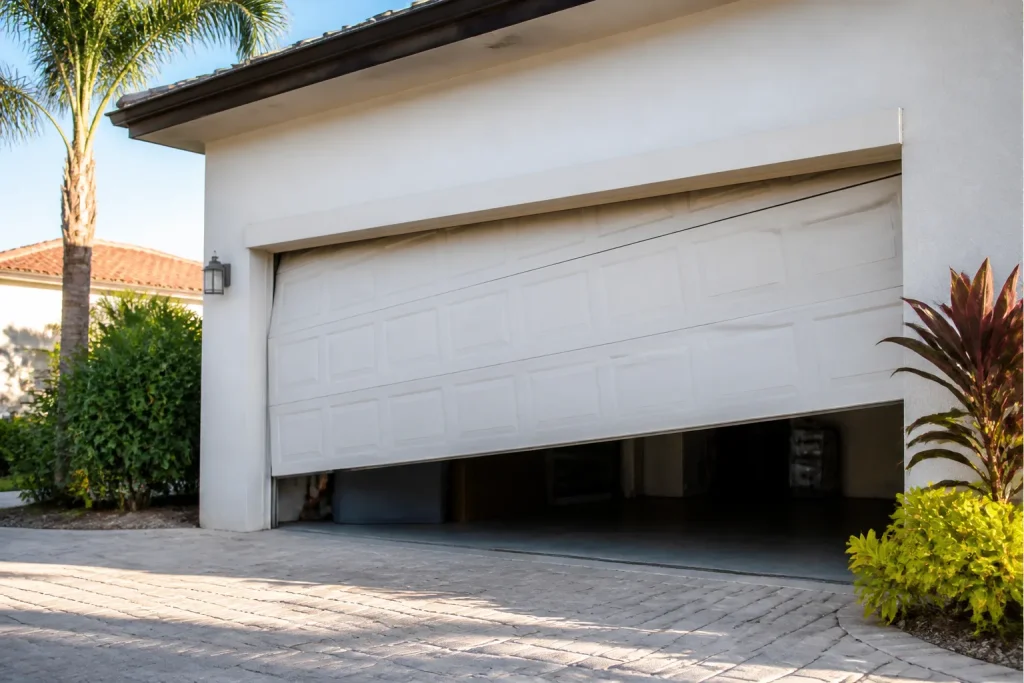
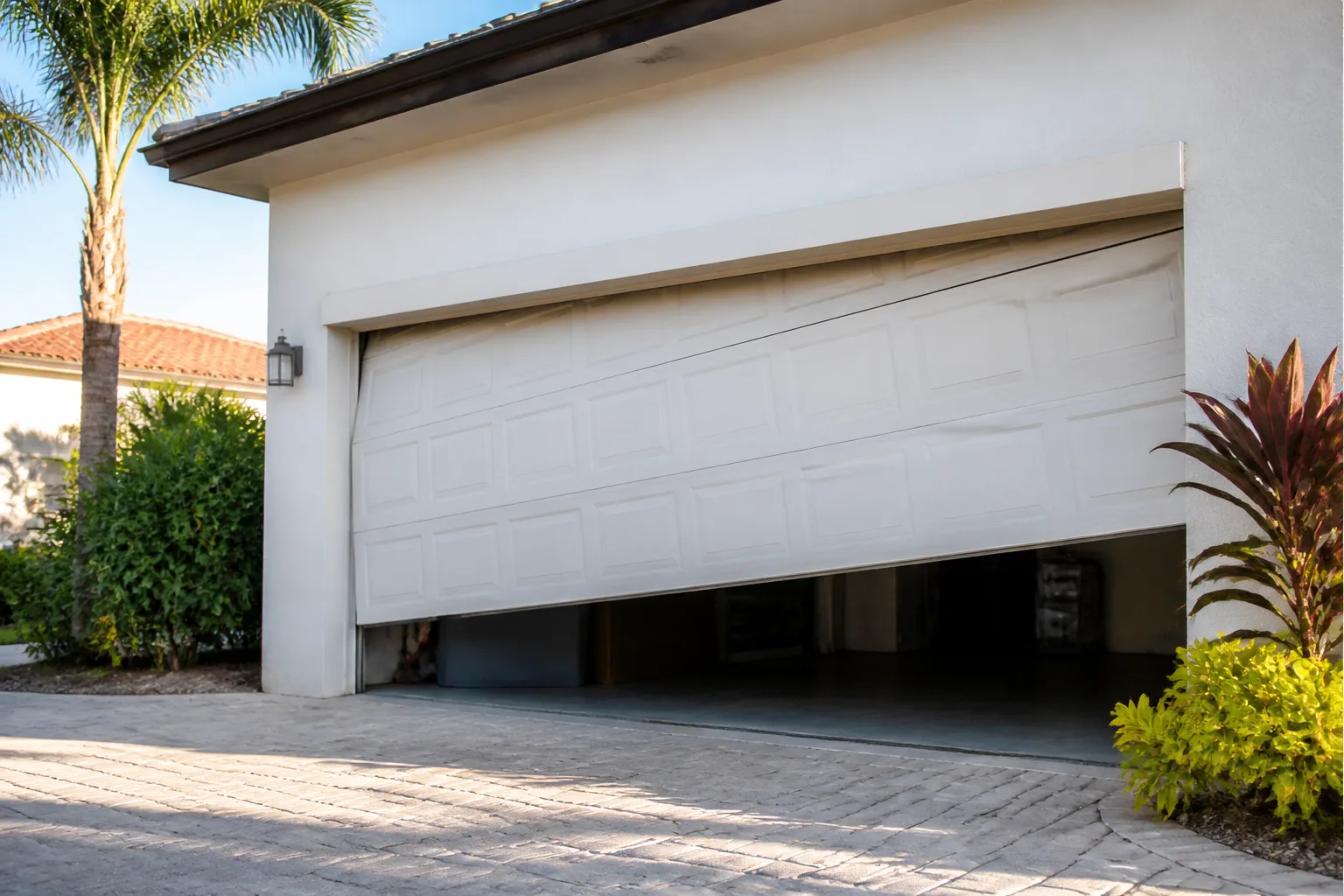
- Uneven lift. If one side of the door rises before the other, one spring is carrying more load than its partner. This is an early warning – the springs are out of balance.
- The door drops faster on one side. A door that slams down or lands crooked means the spring on that side has lost tension. This is a mid-stage failure.
- A visible gap in the torsion spring. A gap or separation in the coil means the spring has broken and the door is now held up by the opener alone. Stop using the door.
That last scenario is where things get dangerous. A torsion spring under tension can cause serious injury if it releases unexpectedly, which is why spring repair done safely means leaving it to a trained technician. We handle spring work as a dedicated service, not a side job, because the stakes are higher than most repairs on the door.
The good news: spring problems caught at the uneven-lift stage are usually a straightforward fix. Left alone, they stress the opener, the cables, and the door panels until you’re replacing more than springs. When you need garage door spring repair, getting to it early keeps the repair small.
Track and Roller Signals: Why Squealing and Grinding Mean Different Things
Not every noise coming from your garage door means the same thing. Squealing and grinding sound similar on a windy afternoon in Deerfield Beach, but they point to different parts and different repairs. Getting this distinction right saves you from paying for work you don’t need – or ignoring work you do.
What each sound is telling you
- Squealing is usually metal-on-metal friction from dry rollers or hinges. It’s a lubrication and wear issue, and it’s the milder of the two. Rollers that squeal are asking for attention before they seize.
- Grinding is heavier and lower-pitched, and it usually comes from a roller that’s worn flat, a bent track, or debris caught in the track channel. This one doesn’t fix itself with grease.
- Rattling or banging often means loose hardware or a track that’s pulled away from the frame, which can let the door drift off its path.
Run your hand along the track (door closed, opener unplugged) and feel for dents or rough spots. Look at the rollers for flat spots or cracks. If the track itself is bent, don’t try to straighten it – a misaligned track can send the door off its rails, and that’s a two-person job with the right tools. For most homeowners, this is the point to book a garage door repair visit and let a technician check the whole track-and-roller system at once.
Opener Warning Signs: The Order to Troubleshoot Them In
When your opener starts acting up, the instinct is to assume the motor is dying. Most of the time it isn’t. Openers are often the messenger, not the culprit. Troubleshoot in this order and you’ll usually find the real problem faster.
- Hesitation on start. The opener pauses, then lurches into motion. That’s the motor straining against a door that’s gotten heavier – usually a spring or balance issue, not the opener itself.
- Reversing without an obstruction. The door goes down, then snaps back up with nothing in the way. Check the safety sensors first: misaligned or dirty sensors are the most common cause. If they’re clean and lined up, the limit switch or force settings may be off.
- Remote range degradation. If you have to be right next to the door for the remote to work, start with a fresh battery. If that doesn’t fix it, the logic board or antenna may be the issue.
If you own a LiftMaster, Chamberlain, Genie, or Craftsman opener, we know these units well and can usually tell you within a few minutes whether you’re looking at a sensor problem or a board problem. We know your opener because we work on these brands every week. Whatever the diagnosis, we quote the fix before any work starts.
One more thing worth knowing: if your opener is more than a decade old and the repair is significant, replacement can make more sense than repair. We’ll give you that honest read rather than selling you a motor you don’t need. When the opener itself is the problem, garage door opener repair can often get you back in service today.
The Deerfield Beach Humidity Factor: When It’s a Door Problem, Not an Opener Problem
Here’s something that trips up a lot of homeowners in Deerfield Beach: the seasonal humidity. Our wet summers and damp stretches swell wood and wood-composite doors. When a door swells, it grows slightly in its frame, which throws off the limit switches on the opener. The door doesn’t travel as far as the opener expects, so it stops short, reverses, or refuses to close all the way.
The homeowner sees an opener that won’t cooperate and assumes the motor is going. In reality, the door is sticking in its tracks because the panels have expanded. This is a door problem wearing an opener costume. Brands like Clopay and Amarr build composite and steel-back doors that handle humidity better than older wood doors, but even those need their tracks and hinges checked when the seasons shift.
If your door acts up mostly in the humid months and behaves fine in drier weather, that’s your clue. A technician can adjust the travel limits and check whether the panels are binding in the frame. Left alone, the opener keeps fighting the swollen door, and that constant strain is what actually wears the motor out. Call (866) 937-7969 if this sounds familiar. We answer 24/7. Fast dispatch from 7am to 7pm, Sunday through Friday.
The Monthly Safety Reversal Test Every Homeowner Should Run
This is the one check we wish every homeowner did. Once a month, put a roll of paper towels or a small box on the ground under the closing door. Close the door using the wall control. When the door hits the object, it should reverse immediately and go back up. If it keeps pressing down, or stops without reversing, the safety system has failed and the door needs service before anyone uses it again.
What a failed test means depends on the symptom. A door that presses down on the object and keeps going may have a force setting that’s too high. A door that reverses too late needs its travel adjusted. Either way, this is a safety problem, not a convenience one – especially in a household with kids or pets who use the garage. A door that fails the reversal test can trap or injure someone, and it’s not something to put off until the weekend.
While you’re at it, check the two photo-eye sensors near the floor on each side of the door. They should be facing each other, with a solid light on each. A blinking light means they’re misaligned or blocked. Wipe them off and nudge them back into line – that part is safe to do yourself. Anything involving the springs, cables, or the opener’s internal force settings is a job for a technician.
When to Call a Pro
Some garage door issues are safe to handle yourself: a dead remote battery, a dirty sensor lens, a squeaky roller that needs a little lubricant. The rest – spring tension, cable work, track realignment, opener force settings, and anything involving the torsion system – belong to a trained technician. The springs and cables are under extreme tension, and a mistake there can cause serious injury. We’d rather you call us than take that risk.
We’re a single-trade specialist. Garage doors are all we do, from emergency calls to full installations, and our technicians have up to 15 years of experience. We work across eight of the most widely owned brands, including LiftMaster, Chamberlain, Genie, Clopay, Amarr, Wayne Dalton, Craftsman, and Raynor, so your specific door or opener is almost certainly within scope. We also offer emergency garage door service when access or security is at stake.
Related services in Deerfield Beach: if one of the symptoms above sounds like your door, you can read more about garage door opener repair and garage door spring repair, or start with Deerfield Beach Garage Door Repair Co to see the full range of what we handle.
The Bottom Line
Garage door problems usually announce themselves before anything breaks. Uneven lifting, a door that drops hard on one side, grinding tracks, an opener that hesitates, or a door that acts up only in humid weather – each one points to a specific system that’s under strain. Catch them early and you’re looking at a small repair. Ignore them and you’re looking at an emergency, often at the worst possible time.
Run that reversal test monthly. Check your sensors. Listen for the difference between a squeal and a grind. When something feels off, don’t wait for it to fail completely. If you’re in Deerfield Beach and need help, Deerfield Beach Garage Door Repair Co offers free estimates – call (866) 937-7969. We answer 24/7. Fast dispatch from 7am to 7pm, Sunday through Friday. The price is quoted and agreed before any work starts, and our written estimate sets the final price.
Frequently Asked Questions
A broken torsion spring usually shows a visible gap in the coil, and the door becomes too heavy to lift by hand or won’t open at all. If you see a gap or the door drops unevenly, stop using it and call a technician – never try to lift or repair a door with a broken spring yourself. Call (866) 937-7969 for a free estimate.
A squeak is usually dry rollers or hinges and is the milder of the common door noises. A grind is more serious – it points to a worn roller, a bent track, or debris in the track. Either way, a checkup is worth it before a small noise becomes a repair. Call (866) 937-7969 to book a visit.
Humidity swells wood and composite doors, which throws off the opener’s limit switches and makes the door bind in its tracks. If the problem shows up mainly in the damp months, it’s often a door issue rather than an opener failure. A technician can adjust the limits and check the panels. Call (866) 937-7969 for a free estimate.
Once a month. Put a roll of paper towels under the closing door and confirm it reverses on contact. If it doesn’t reverse or keeps pressing down, the safety system needs service before the door is used again. Call (866) 937-7969 if your door fails the test.
Written by the team at Deerfield Beach Garage Door Repair Co.
Need Garage Door Help?
Call Deerfield Beach Garage Door Repair Co - the local pro we connect you with is licensed and insured, here with fast help in Deerfield Beach.
(866) 937-7969