
Last updated November 23, 2026
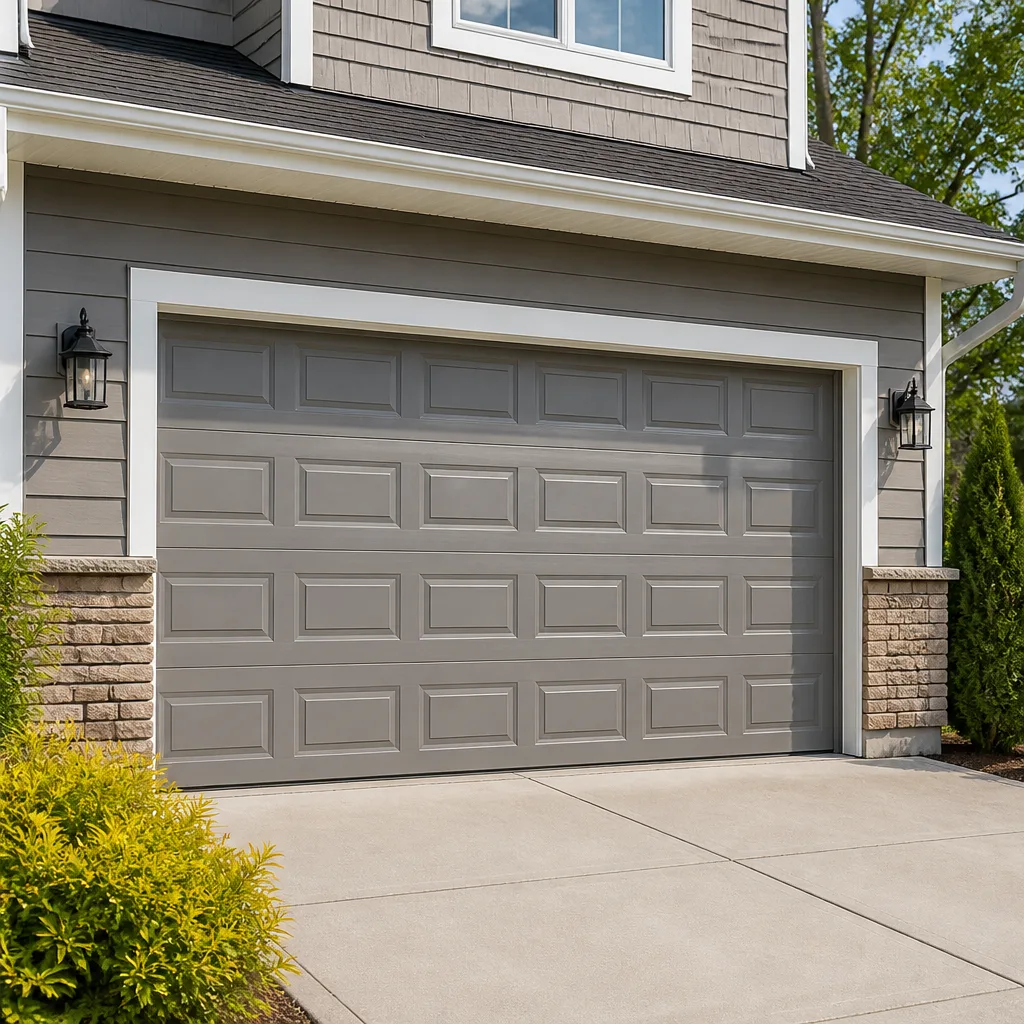 Raised-panel steel
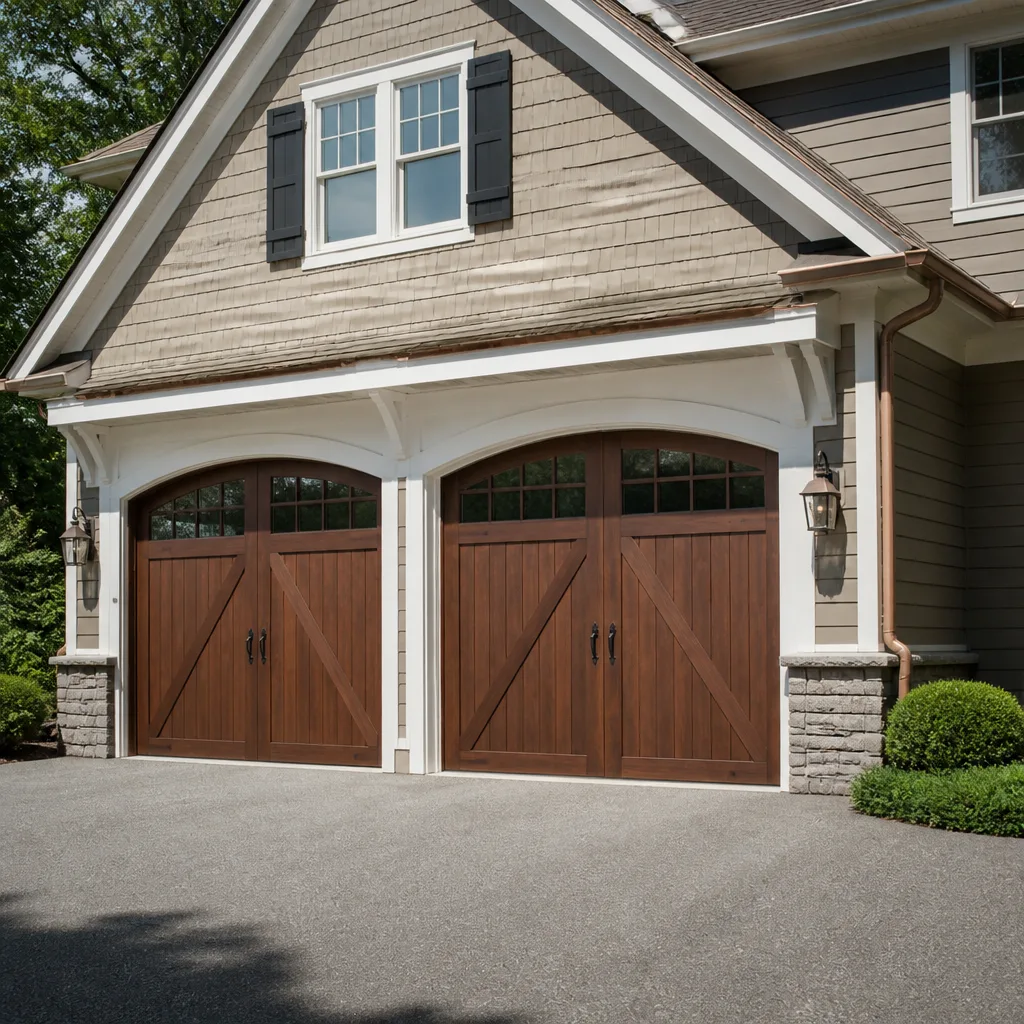 Carriage house
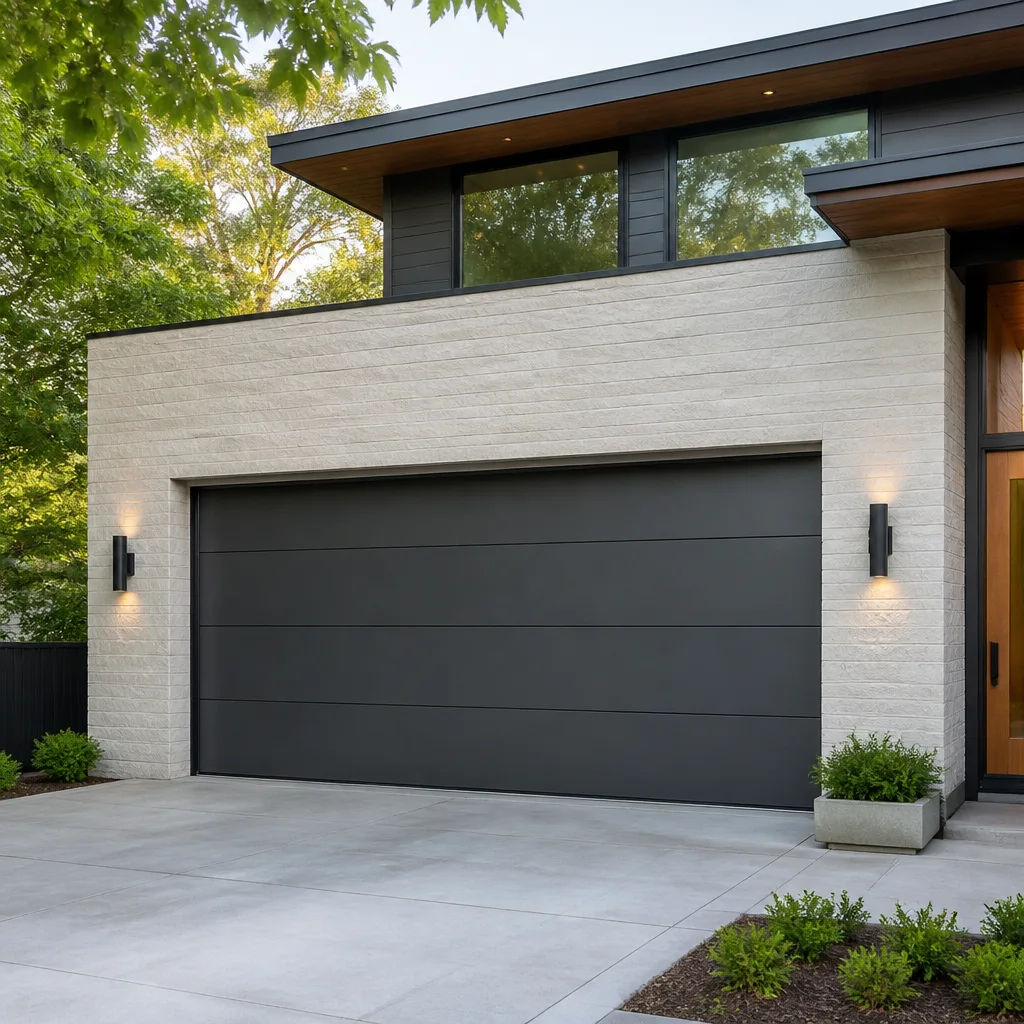 Modern flush
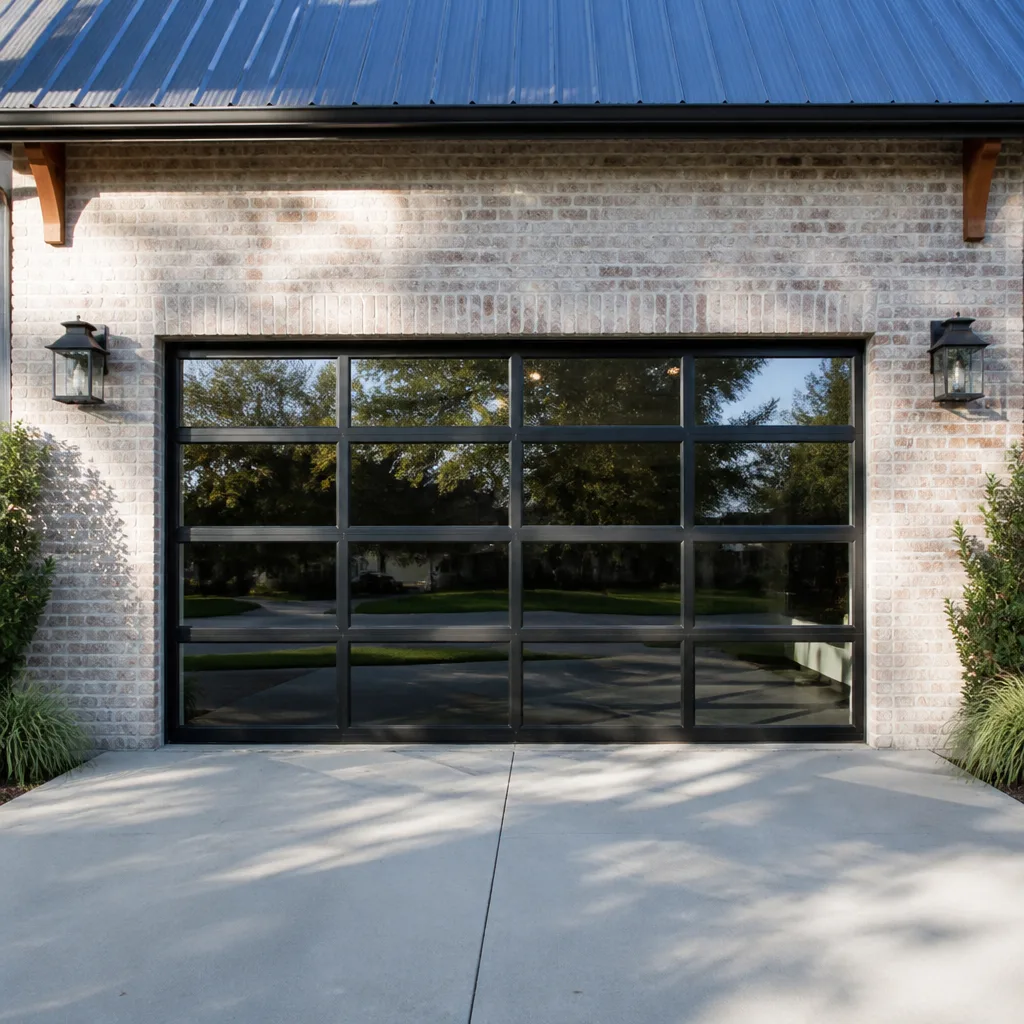 Full-view glass
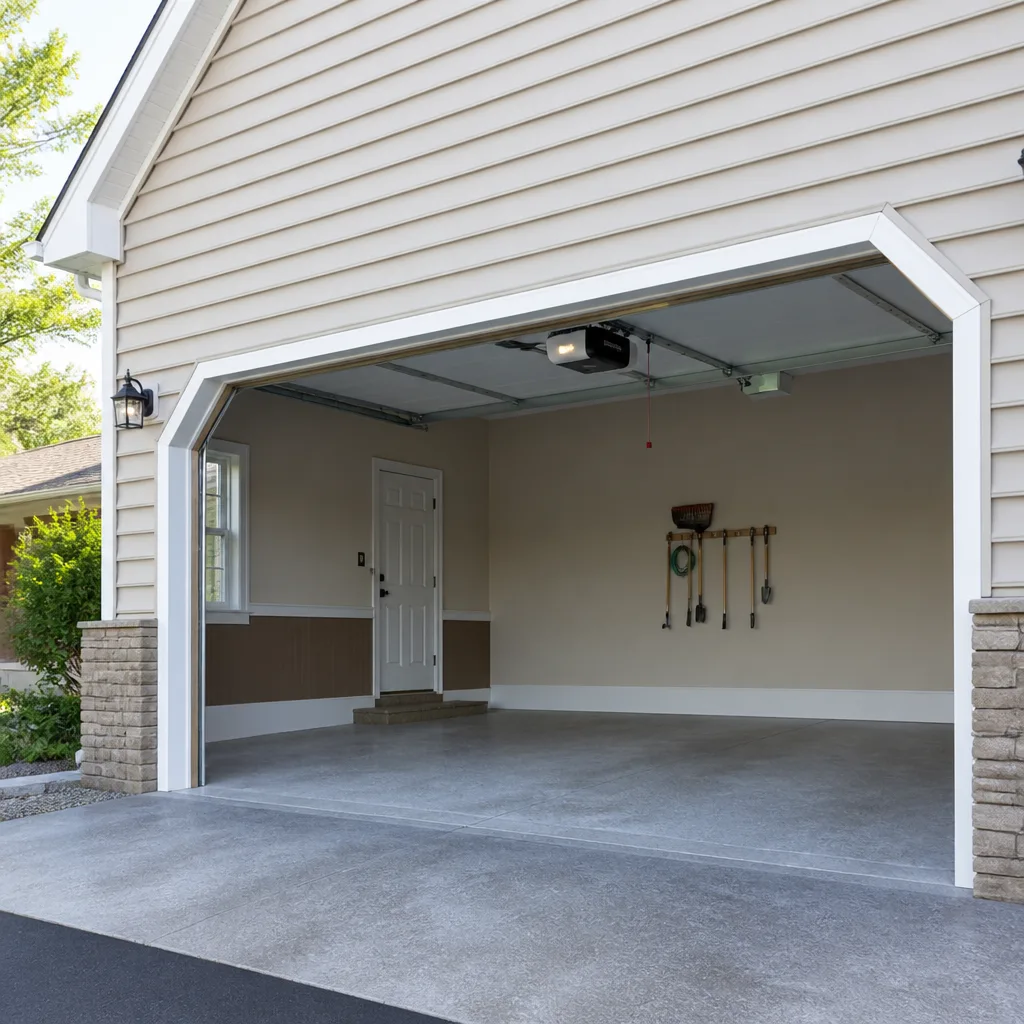 LiftMaster openers
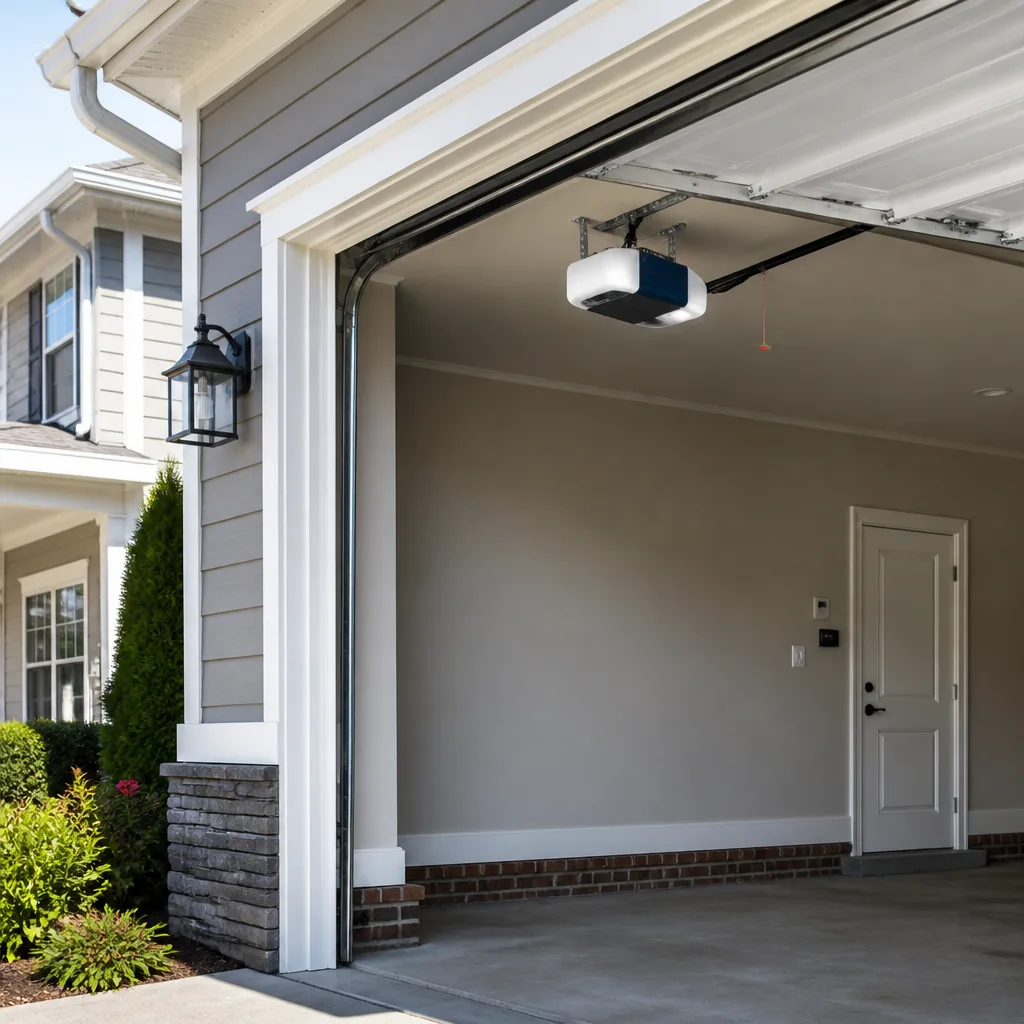 Chamberlain openers
Full 25-point door and opener safety check with every visit - springs, cables, rollers, tracks, and your LiftMaster or Chamberlain opener included
You get a price before we start. It does not change when the pro arrives.
Get your free estimateDIY vs Professional Garage Door: The Deerfield Beach Homeowner’s Decision Guide
Most garage door advice online treats DIY versus professional as a question of confidence. If you’re handy and you’ve watched enough video, the thinking goes, you can handle it. That framing misses the real issue. A garage door is one of the few things in your home that stores energy and releases it through heavy metal, and the tasks split cleanly into ones that are genuinely safe for a homeowner and ones that aren’t, no matter how prepared you are. A fully wound torsion spring on a standard two-car door can hold enough stored energy that a wrong move means a serious injury. This guide draws the hard line between the two categories for Deerfield Beach homeowners, task by task, so you can decide what to take on and what to hand off.
Quick Answer
Lubrication, sensor alignment, remote and keypad reprogramming, and weatherseal replacement are genuinely DIY-appropriate and worth doing yourself. Torsion spring work, cable replacement, track straightening after a hard hit, panel replacement, and opener motor repair are not, because the risk scales with the weight of the door and the energy in the system. Everything else falls in the middle and depends on your tools, your warranty, and how the door is built.
Styles & brands we work with
- Raised-panel steel
- Carriage house
- Modern flush
- Full-view glass
- LiftMaster openers
- Chamberlain openers
Table of Contents
- Why Garage Door Work Isn’t Like Other Home Repairs
- Which Garage Door Jobs Are Actually Safe to DIY?
- Torsion vs Extension Springs: Why the Distinction Matters in Deerfield Beach
- Does DIY Work Void Your Hurricane-Rated Door Warranty?
- How to Evaluate a DIY Repair That Didn’t Work
- DIY vs Professional: The Honest Cost Comparison
- What Deerfield Beach Climate and Housing Mean for Your Door
- Which Brands Are Harder to DIY Than Others?
Why Garage Door Work Isn’t Like Other Home Repairs
A garage door is a balanced mechanical system under constant tension. The springs, not the opener, do the lifting. The opener’s job is to push and pull a door that’s already most of the way to weightless. That’s why a standard opener can move a 200-pound door with a small motor, and it’s also why the system is unforgiving when something goes wrong.
Torsion springs store energy as they’re wound. A fully wound spring on a two-car door holds a significant amount of torque, and the force is there whether the door is open or closed. When a spring breaks, it releases that stored energy at once. That’s the source of the sound homeowners describe as a gunshot from the garage. It’s also why a technician uses winding bars and specific procedures rather than a wrench and a ladder. There’s no version of torsion work where a slow, careful approach removes the risk, because the risk isn’t about speed. It’s about the stored energy in a metal coil that can fracture and release.
Contrast that with a stuck window or a loose cabinet hinge, where a mistake costs time and a replacement part. On a garage door, a mistake during spring, cable, or track work can mean a dropped door, a bent panel, or an injury. That’s the distinction this guide is built on. The question isn’t whether you’re capable. It’s whether the task has a failure mode that hurts.
In our experience across Deerfield Beach, the tasks homeowners regret attempting are almost always the ones where a wrong move bends a panel or pinches a cable, and the repair bill that follows is larger than the original job would have been. Knowing which category a task falls into is the whole decision.
Which Garage Door Jobs Are Actually Safe to DIY?
Plenty of garage door maintenance is well within reach of a homeowner with basic tools, and doing it yourself saves money and keeps the door working longer. These jobs don’t touch the energy-storing parts of the system, and a mistake doesn’t create an injury risk.
Genuinely DIY-appropriate tasks
- Lubrication. Hinges, rollers, and the torsion bar bearings benefit from a garage-door-rated lubricant a couple of times a year. Avoid greasing the tracks themselves; they’re meant to run dry.
- Safety sensor alignment. If the door reverses for no reason, the two sensors near the floor are usually misaligned or blocked. Straighten them so the indicator lights are solid and steady.
- Remote and keypad reprogramming. Clearing old remotes and pairing new ones is a menu-and-button job for any LiftMaster, Chamberlain, Genie, or Craftsman unit, and the manual walks you through it.
- Weatherseal replacement. The rubber strip along the bottom of the door pulls out and slides back in. A worn seal lets water and pests in; a new one takes twenty minutes.
- Visual inspection. Look at cables for fraying, springs for a visible gap, and rollers for flat spots. You’re gathering information, not adjusting anything.
- Track cleaning and debris removal. Clearing leaves and dirt from the tracks is safe and keeps the door running smooth.
Tasks that need a trained technician
- Torsion spring adjustment or replacement. This is the highest-risk job on the door, and no amount of preparation makes it a safe homeowner task.
- Cable replacement. Cables are under the same tension as the springs and can whip when released.
- Track straightening after impact. A bent track needs to be brought back into alignment geometrically, and a door that jumps a damaged track can come down.
- Panel replacement. Sections are heavy and must be sequenced correctly so the door stays balanced.
- Opener motor, gear, or logic board repair. These involve live wiring and internal parts that aren’t designed for field repair by a homeowner.
If you’re unsure which side of the line a job sits on, that’s a good sign to ask before you start. A quick call tells you which category it’s in, and you can decide from there.
Torsion vs Extension Springs: Why the Distinction Matters in Deerfield Beach
A lot of homeowners in Deerfield Beach hear “spring repair” and assume it’s one job. It isn’t. Torsion and extension springs are different systems with different risk profiles, and that distinction drives a good part of the DIY decision.
How extension springs work
Extension springs run along the horizontal tracks on each side of the door and stretch as the door closes. They’re the older system and still common on single-car doors. They carry real energy but they’re accessible, replaceable, and generally easier to manage. They also have a failure mode: when one breaks, it can swing, which is why extension systems should always have a safety cable running through the center of each spring. If your door has extension springs and no safety cable through the middle, that’s worth knowing before you do anything near them.
How torsion springs work
Torsion springs mount on a bar above the door and wind tight around that bar. They’re the system on most two-car doors and almost every newer install. Winding them requires winding bars and a specific sequence, and the stored energy in a wound torsion spring is what makes it dangerous. There’s no safe way to adjust or replace a torsion spring without the right tools and the training to use them. This is a job for a trained professional, every time.
Why it matters more in Deerfield Beach
Deerfield Beach homes often carry impact-rated garage doors as part of a hurricane-hardened building envelope. Impact-rated panels are heavier than standard steel panels, which means the spring has to be wound tighter to balance the door. Higher door weight means more stored energy in the same spring housing. A torsion job on a Deerfield Beach door with impact panels isn’t just the standard version of a risky task, it’s a slightly higher-load version of it. That’s one more reason the line holds.
If your door has a broken spring and you’re weighing whether to touch it, the honest answer is to leave it. Our garage door spring repair service exists because this is the task most homeowners should never take on themselves.
One note on pricing so you can plan: a spring repair in Deerfield Beach typically runs $180 to $340 for a single spring, and replaces are usually done in matched pairs, so a pair is roughly double that. Those are typical estimates, and the written quote you get before work starts sets the final price. Call (866) 937-7969 for a free estimate.
Does DIY Work Void Your Hurricane-Rated Door Warranty?
It can, and the fine print on impact-rated doors is usually specific about it. Most manufacturers cover the door under two separate warranties: the panel and structural warranty, and the hardware warranty that covers springs, rollers, hinges, and the opener if it’s a bundled unit. The panel warranty almost always survives normal maintenance. The hardware warranty is where the language gets tight.
What the fine print usually says
Manufacturer warranties for impact-rated doors from brands like Clopay and Amarr typically exclude damage caused by improper installation, adjustment, or repair by anyone other than an authorized technician. Spring replacement and opener service are the two jobs that show up most often in that exclusion. If you replace a torsion spring yourself and the spring or a related component fails later, the manufacturer can decline the hardware claim because the work wasn’t performed to their spec. The panel warranty usually remains in force, but the parts that fail most are the parts the exclusion covers.
What that means for your decision
If your door is still under its manufacturer warranty, the calculation changes. A DIY repair that saves $150 on the job could cost you the coverage on a component that would have been replaced free. That’s not a scare tactic, it’s the plain reading of how these warranties are written. Before you take on any repair beyond lubrication and seal replacement, check your door’s documentation for the hardware section, or ask the manufacturer whether the job keeps you in coverage.
On a hurricane-rated door in Deerfield Beach, the stakes are higher because the whole point of the door is code compliance. A repair done outside the manufacturer’s spec can also raise a question about whether the door still meets its rated wind-load performance. That’s a conversation for your local building department if you’re unsure, especially if a permit was pulled on the original install.
How to Evaluate a DIY Repair That Didn’t Work
You tried something, it didn’t fix the problem, and now you’re deciding whether to keep going or call someone. The difference between an efficient service call and one that starts from zero is the information you can hand over. Gather these five things before you call.
- What you actually did. Be specific. “I adjusted the sensors” and “I turned the limit screws on the opener” are very different starting points, and the second one means the technician needs to reset the opener’s travel limits before diagnosing anything else.
- What changed after your attempt. Did the door get worse, better, or behave the same? Did a new noise start? Did the door reverse more often, or stop reversing at all? That change is a clue about what your adjustment moved.
- Photos of the mechanism. A close photo of the spring, the cables at the bottom corners, and the opener’s travel limit screws tells a technician a lot before they arrive. It also helps them know which parts to bring.
- Your door’s make and model. Why it matters: the fix differs by brand and age. If you own a LiftMaster or Chamberlain opener, tell them. If your door is a Clopay, tell them. The technician can check compatibility and bring the right parts.
- Whether you touched anything load-bearing. If you turned the torsion bar, adjusted a cable, or loosened anything under tension, say so first. That single fact changes the order of the visit and the safety precautions.
Don’t attempt to undo a failed repair if it involved a spring or cable. A door that’s stuck open or half-open is a security gap, but a door you tried to rebalance could come down without warning. Leave it in its current state and describe the situation when you call. Fast dispatch from 7am to 7pm means you won’t wait long for a technician to assess it.
DIY vs Professional: The Honest Cost Comparison
The assumption that DIY is always cheaper breaks down once you count the full cost. A garage door repair isn’t just a part; it’s the part, the tool, the risk of a second failure, and the time. Here’s how the numbers usually shake out for the jobs homeowners most often try to take on themselves.
| Job | DIY material cost | Professional estimate (Deerfield Beach) | Honest recommendation |
|---|---|---|---|
| Torsion spring (single) | $40-$80 for the spring, plus $40-$80 for winding bars | $180-$340 per spring; a matched pair roughly doubles it | Professional only |
| Torsion spring (matched pair) | $80-$160 for springs | Roughly twice the single-spring range | Professional only |
| Safety sensor alignment | $0 (adjustment only) | $100-$180 if something is actually broken | DIY if it’s alignment |
| Remote reprogramming | $0 with existing remote | $80-$150 for a new remote and pairing | DIY |
| Weatherseal replacement | $20-$60 for the seal | $120-$220 installed | DIY |
| Opener gear/capacitor | $25-$60 in parts | $180-$350 | Professional, unless you’re comfortable with the electrical side |
These are typical estimates for the Deerfield Beach market; the written quote you get before work starts is the final price.
Where DIY costs more than it saves
Three hidden costs flip the math. The first is retail parts markup: a spring you buy yourself costs more per unit than the same part a professional sources. The second is the risk of compounding damage. A failed DIY spring replacement can bend a panel, and panel replacement runs far higher than the spring job would have. The third is the tool cost: winding bars for torsion springs aren’t cheap, and you use them once. Add those up and the DIY savings on a spring job often disappear entirely, while the risk stays.
For lubrication, sensor alignment, and seal replacement, the savings are real and the risk is close to zero. For anything involving springs, cables, or the opener’s internal components, professional service is usually cheaper in the long run even before you count the injury risk.
What Deerfield Beach Climate and Housing Mean for Your Door
The local climate shapes how often a door needs attention and which parts wear first. Deerfield Beach summers are hot and humid for months. That does specific things to a garage door.
Heat and humidity
High humidity works on the steel parts of the door: hinges, rollers, and the springs themselves. Rust forms faster in a garage that isn’t conditioned, and a rusted spring is a weakened spring. In our experience, doors near the ocean are hardest hit, not because of salt carried on the wind, but because the air itself is consistently damp and the garage is a humid, enclosed space. Rollers that would last years in a dry climate can develop flat spots sooner here. Lubrication twice a year does more in Deerfield Beach than it would in a drier market, and it’s the single best thing a homeowner can do to stretch the life of the hardware.
Impact-rated panels and spring load
Many Deerfield Beach homes are built or upgraded to a wind-resistant standard, and that means impact-rated garage doors. Those panels are heavier than standard steel sections, which changes the load on the spring. As mentioned earlier, a heavier door needs a spring wound tighter to balance it. That relationship is invisible to a homeowner but it’s the reason Deerfield Beach spring work is a bit more demanding than the same job on a lighter door. It also means that if a spring gets replaced, it needs to be matched to the actual door weight, not to whatever spring the previous homeowner left in the box. A technician who measures the door and selects the spring accordingly is doing it right.
No snow, no freeze problems
One thing Deerfield Beach doesn’t do: the door never deals with snow load or ice in the tracks. That means the winter-related garage door problems you read about online mostly don’t apply here. Your door’s wear comes from humidity, heat, and the weight of the panels, not from cold. Adjusting your maintenance routine to the actual local conditions saves time and prevents surprises.
Which Brands Are Harder to DIY Than Others?
The brand of your door and opener changes how much of the work is homeowner-friendly. Some systems are designed for user service; others lock down the internal parts. We service eight major brands, including LiftMaster, Chamberlain, Genie, and Clopay, and the pattern is fairly consistent.
- LiftMaster and Chamberlain openers. The remotes and keypads are easy to program, and the manuals are clear. The internal gear and logic board are not homeowner-serviceable, and a failed opener usually needs a technician. If yours is one of these, our garage door opener repair handles the internal work.
- Genie openers. Programming is straightforward, but the limit switches and force adjustments are more sensitive. Turning the wrong screw can make the door reverse constantly or fail to reverse at all, which is a safety problem.
- Clopay doors. Panel and hardware replacement should follow the manufacturer’s spec, especially on impact-rated models where the rating depends on the assembly. DIY spring work on a Clopay impact door almost certainly voids the hardware warranty.
- Older Craftsman and Wayne Dalton units. Parts availability varies. If your opener is older, the technician may need to source a compatible part, so having the model number ready makes the call faster.
For every brand, the split is the same: user-level tasks (remotes, keypads, seals, sensors) are yours, and the mechanical and electrical internals are the technician’s. Knowing your brand tells you which parts are on the shelf and which take a special order, which is useful when you’re deciding what to do yourself.
Common Mistakes to Avoid
- Winding a torsion spring “carefully.” There’s no careful version of this task without the right tools and training. The stored energy doesn’t care how slowly you go.
- Ignoring the warning sign of a broken extension spring. When one extension spring breaks, the door becomes unbalanced and the second spring carries twice the load. Running the opener on a half-spring door can damage it and is a real safety risk.
- Greasing the tracks. Tracks should run dry. A greased track collects grit and causes the rollers to slide instead of roll. In humid Deerfield Beach air, that grit turns into a grinding compound.
- Adjusting the opener’s travel limits to compensate for a mechanical problem. If the door doesn’t close all the way because a spring is weak, turning up the opener force is the wrong fix. It masks the problem and stresses the motor. Fix the door, not the limit setting.
- Replacing a spring with the wrong size. Spring size is matched to door weight and height. A spring from the hardware store that “looks the same” can leave the door unbalanced and overworks the opener. This is especially true for heavier impact-rated panels in Deerfield Beach homes.
- Removing the safety cable from an extension spring system. If your extension springs don’t have a safety cable running through them, that’s a project worth prioritizing before anything else. Take the DIY task list and start there.
- Assuming a door that reverses is broken. The safety sensors trip for reasons that are often simple: a misalignment, a spider web, or sun glare at a specific time of day. Check the sensors before you call.
See the difference
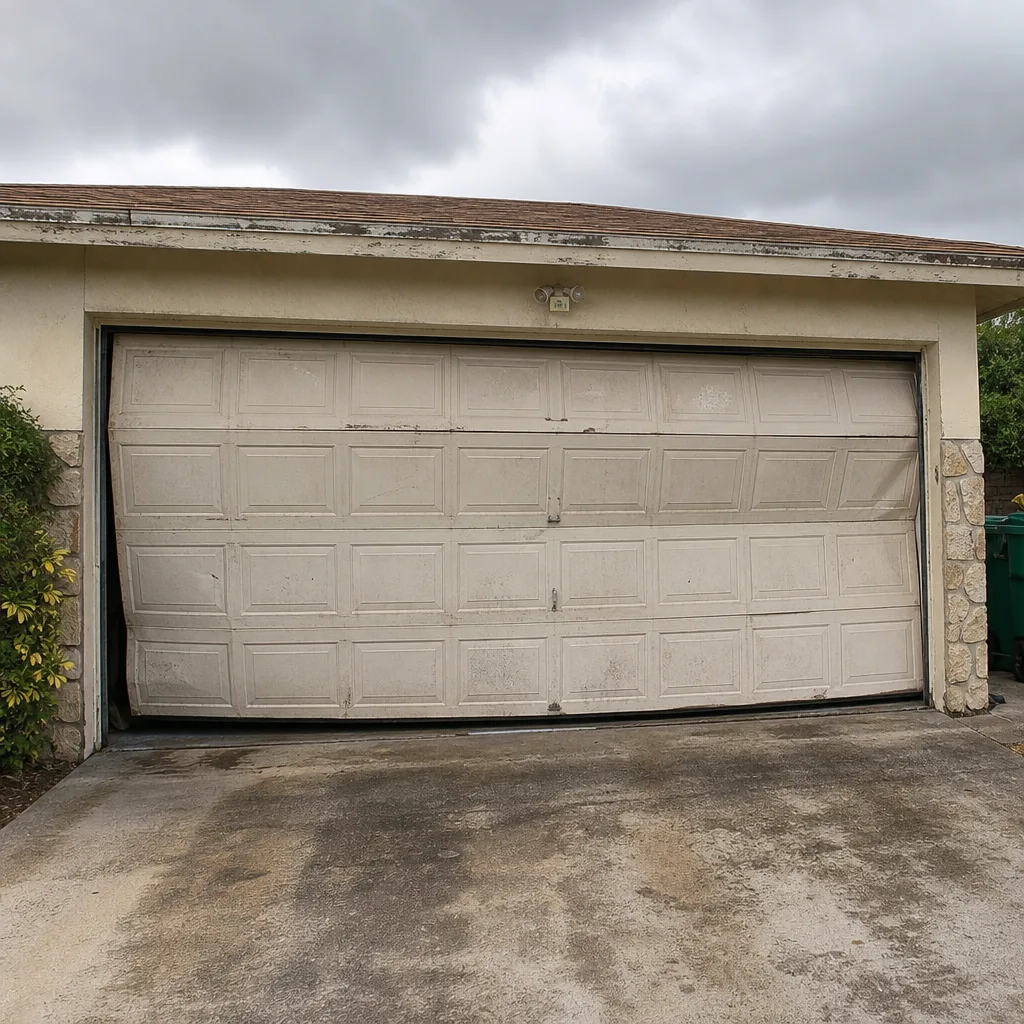 Before
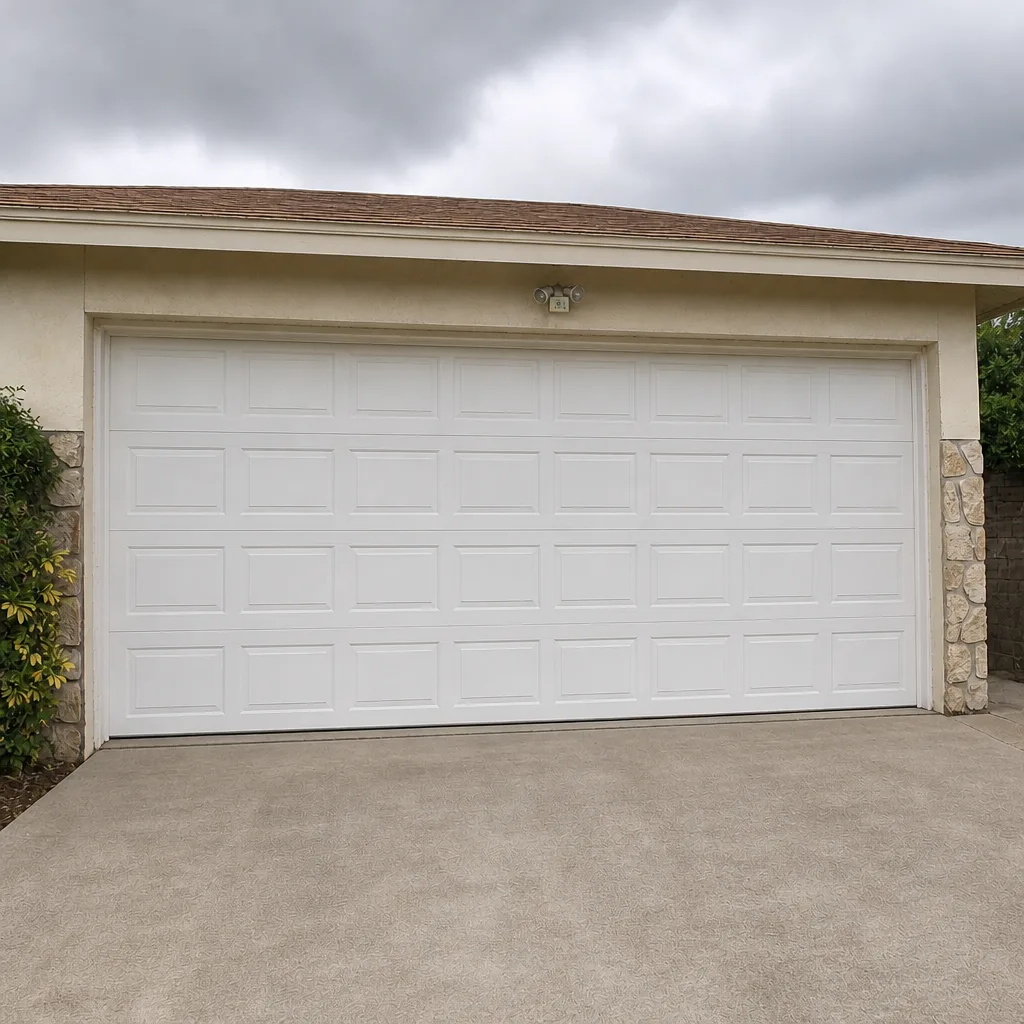 After
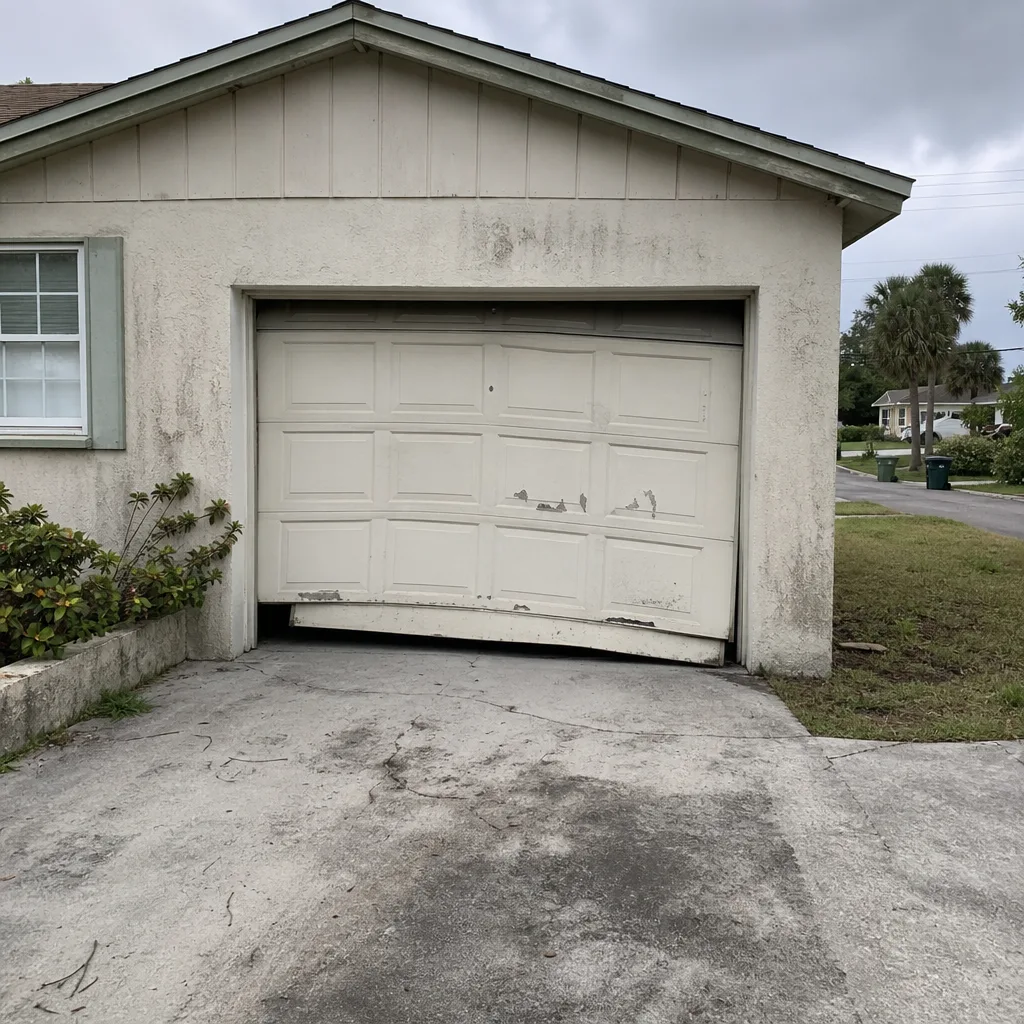 Before
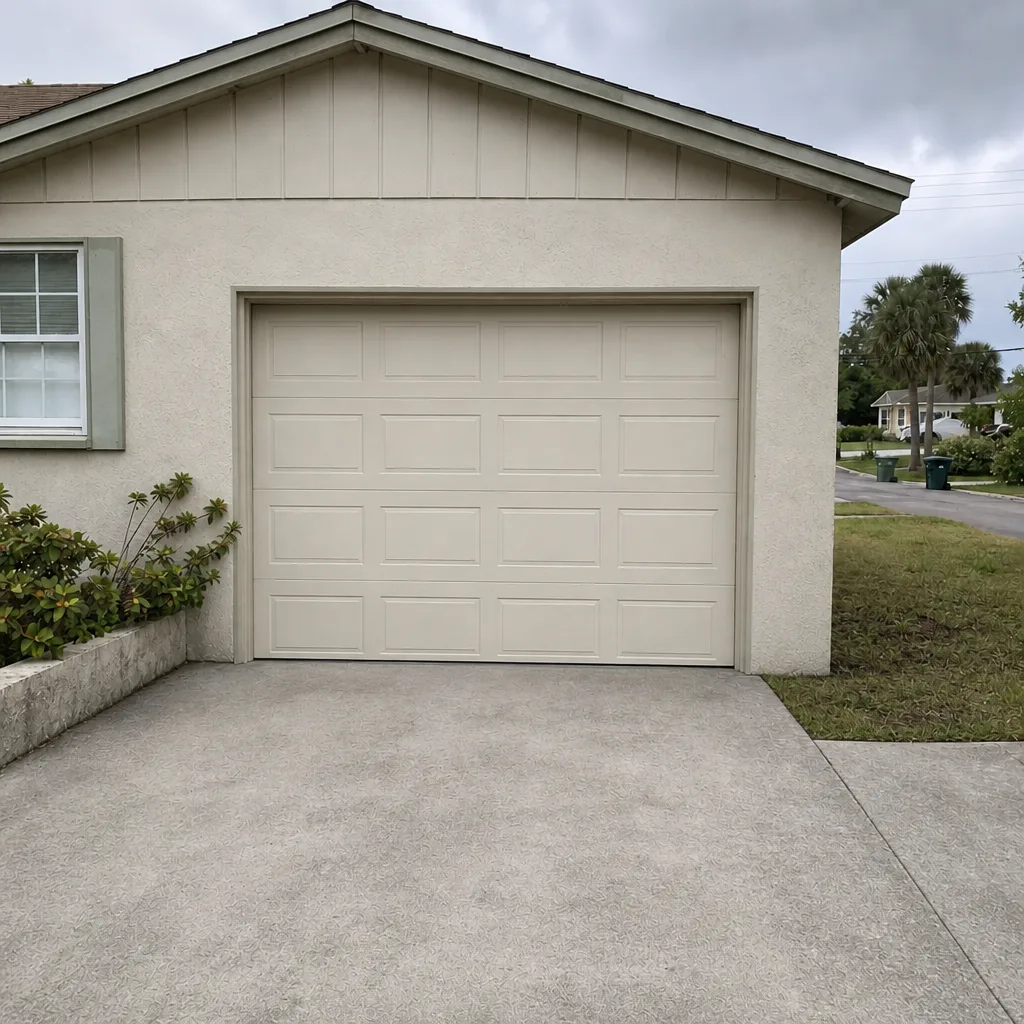 After
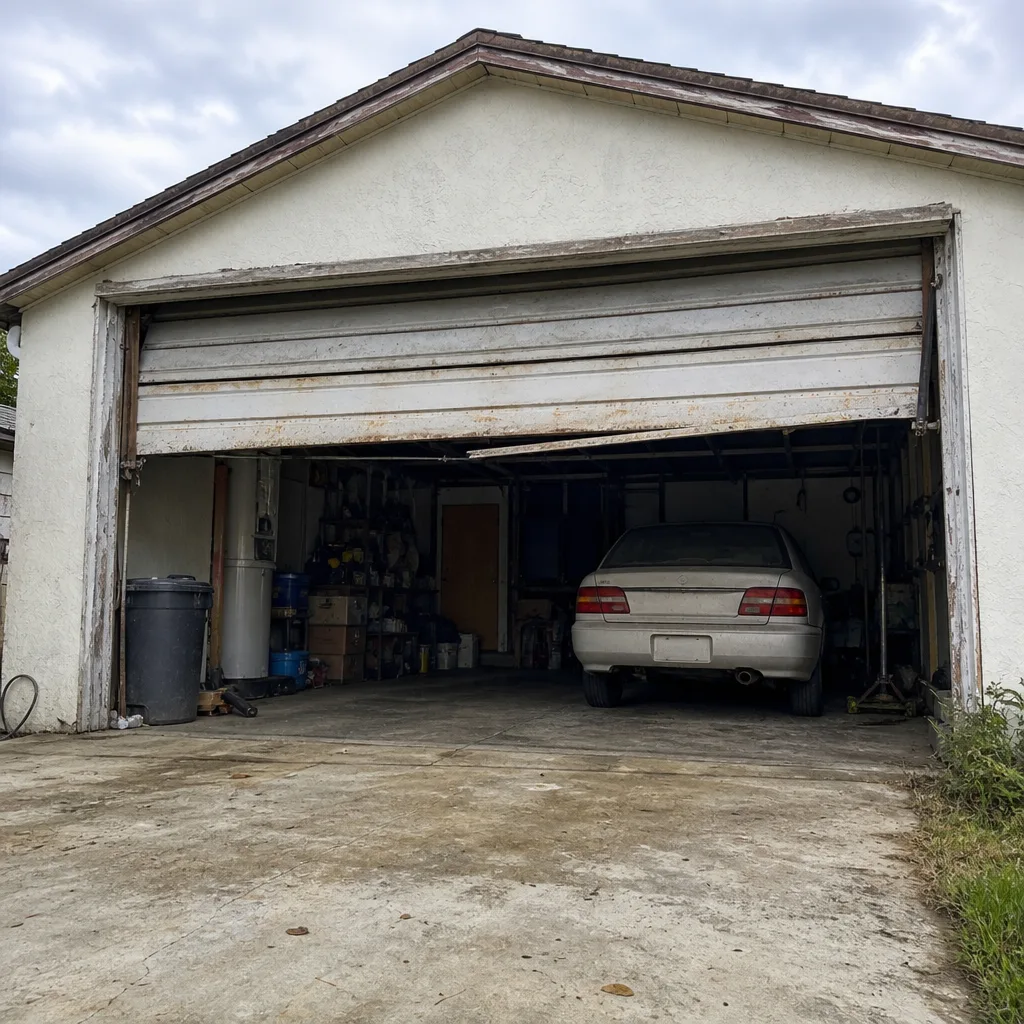 Before
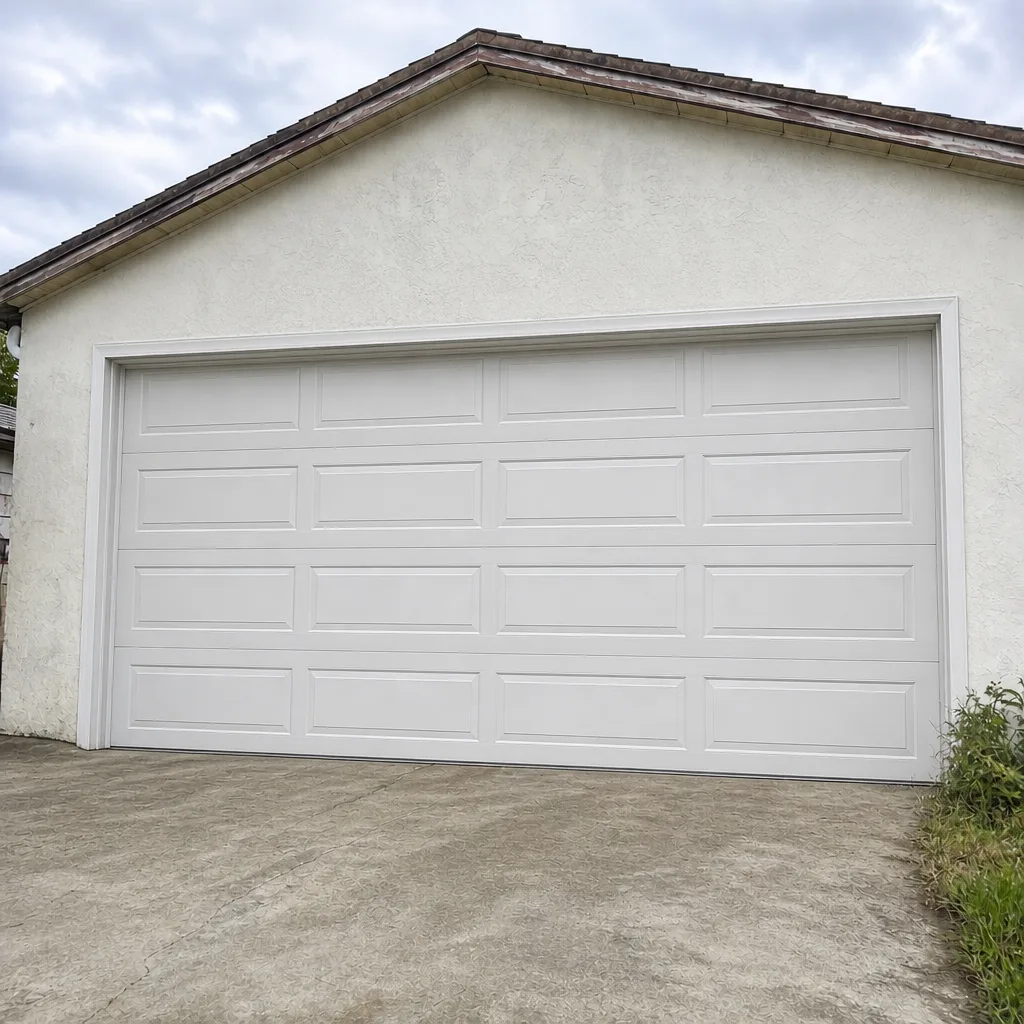 After
When to Call a Professional
Call a professional when the task touches springs, cables, tracks, panels, or the opener’s internal electrical components. Call sooner if the door is stuck open (a security gap), stuck past halfway with a broken spring (a drop hazard), or if you tried a repair and the door now behaves differently. A door off its tracks, a loud bang followed by a dead door, and an opener that won’t move the door are all signs to stop and hand it off.
Those are the situations where skill matters more than cost. A trained technician can diagnose, quote, and fix a door before it causes further damage, and our garage door repair service is set up for exactly this. Deerfield Beach Garage Door Repair Co offers free estimates in Deerfield Beach, call (866) 937-7969. Our technicians have up to 15 years of experience, and we answer 24/7 with fast dispatch from 7am to 7pm, Sunday through Friday.
Frequently Asked Questions
No. A garage door torsion spring stores enough energy to cause serious injury if released incorrectly, and replacing or adjusting one requires winding bars and training that homeowners don’t have. Extension springs are somewhat more accessible, but a broken extension spring still unbalances the door, and the second spring then carries double the load. For any spring work, call (866) 937-7969 for a free estimate; it’s the safest and usually the cheapest path once tool cost and damage risk are counted.
A torsion spring repair in Deerfield Beach typically runs $180 to $340 for a single spring, and because springs are usually replaced in matched pairs, a pair costs roughly double that. These are typical estimates; the written quote you get before work begins is the final price, and the estimate is free. Call (866) 937-7969 for an exact quote.
It can. Most manufacturers cover the door and the hardware under separate warranties, and the hardware warranty usually excludes damage from work done by anyone other than an authorized technician. Spring replacement and opener service are the jobs most likely to be affected. Check your door’s documentation before you start, or call us and we’ll help you understand what you’re covered for.
Lubrication, safety sensor alignment, remote and keypad reprogramming, weatherseal replacement, and visual inspection are all safe for homeowners. These tasks don’t touch springs, cables, or the opener’s internal components. Anything that involves a spring, a cable, a bent track, a panel, or the opener’s electrical parts should go to a technician.
Often, yes. Emergency garage door service is a core part of what we do, and same-day repair is frequently possible for common problems like a broken spring, an opener that won’t respond, or a door off its tracks. Call (866) 937-7969; we answer 24/7 and dispatch from 7am to 7pm, Sunday through Friday (we’re closed Saturday).
We service eight major brands, including LiftMaster, Chamberlain, Genie, Clopay, Amarr, Wayne Dalton, Craftsman, and Raynor. Tell us the make and model when you call and we’ll confirm the parts and the service. Our Deerfield Beach Garage Door Repair Co team handles both the door system and the opener as separate services, so the whole garage is covered.
The Bottom Line
The DIY decision on a garage door comes down to one question: does the task involve stored energy or the structural weight of the door? If it does, professional service is the only defensible choice, no matter how handy you are. Lubrication, sensor alignment, remote programming, and weatherseal work stay with you and save real money. Torsion springs, cables, track straightening, panel replacement, and opener internals go to a trained technician, especially in Deerfield Beach where heavier impact-rated doors put more load on the spring. Count the tool cost and the damage risk, and the professional route usually wins on the numbers too. Call (866) 937-7969 for a free estimate; we answer 24/7, with fast dispatch from 7am to 7pm, Sunday through Friday.
Written by the team at Deerfield Beach Garage Door Repair Co.