
Last updated November 23, 2026
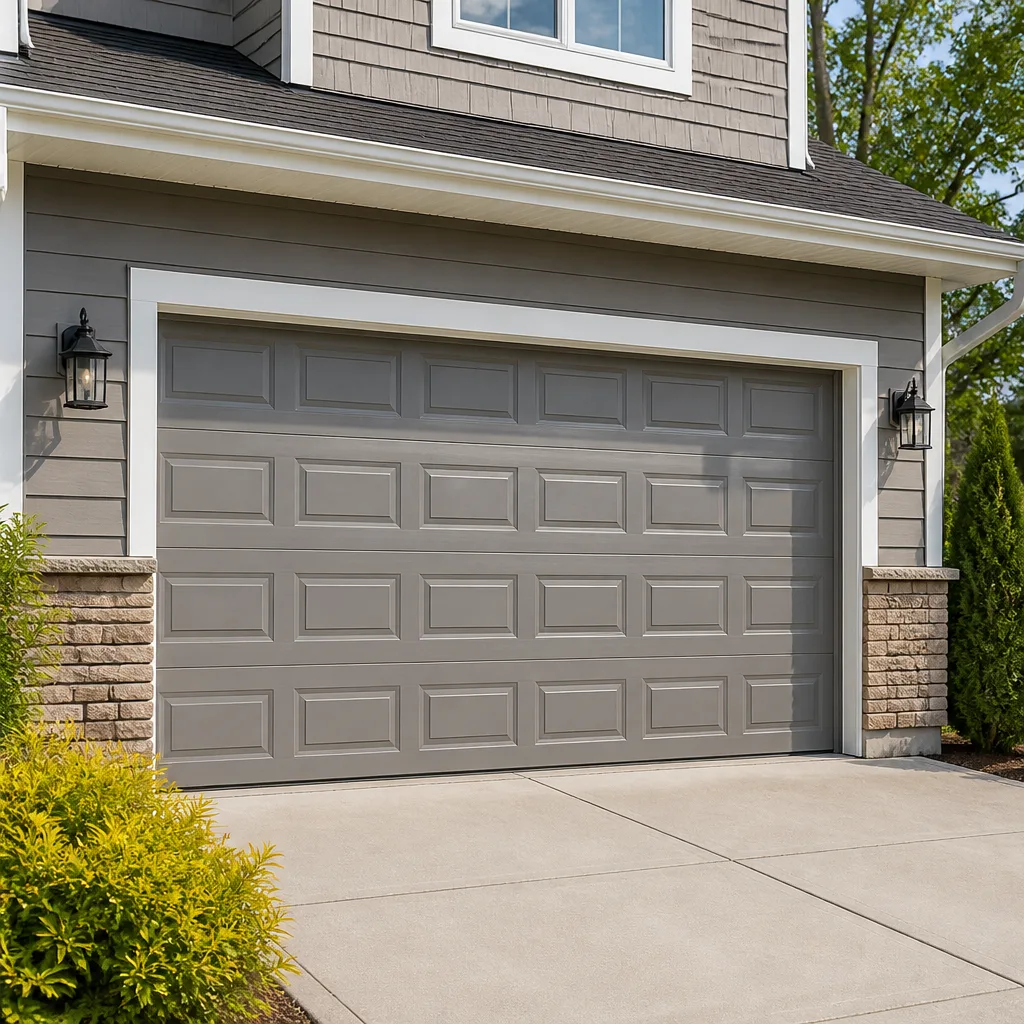 Raised-panel steel
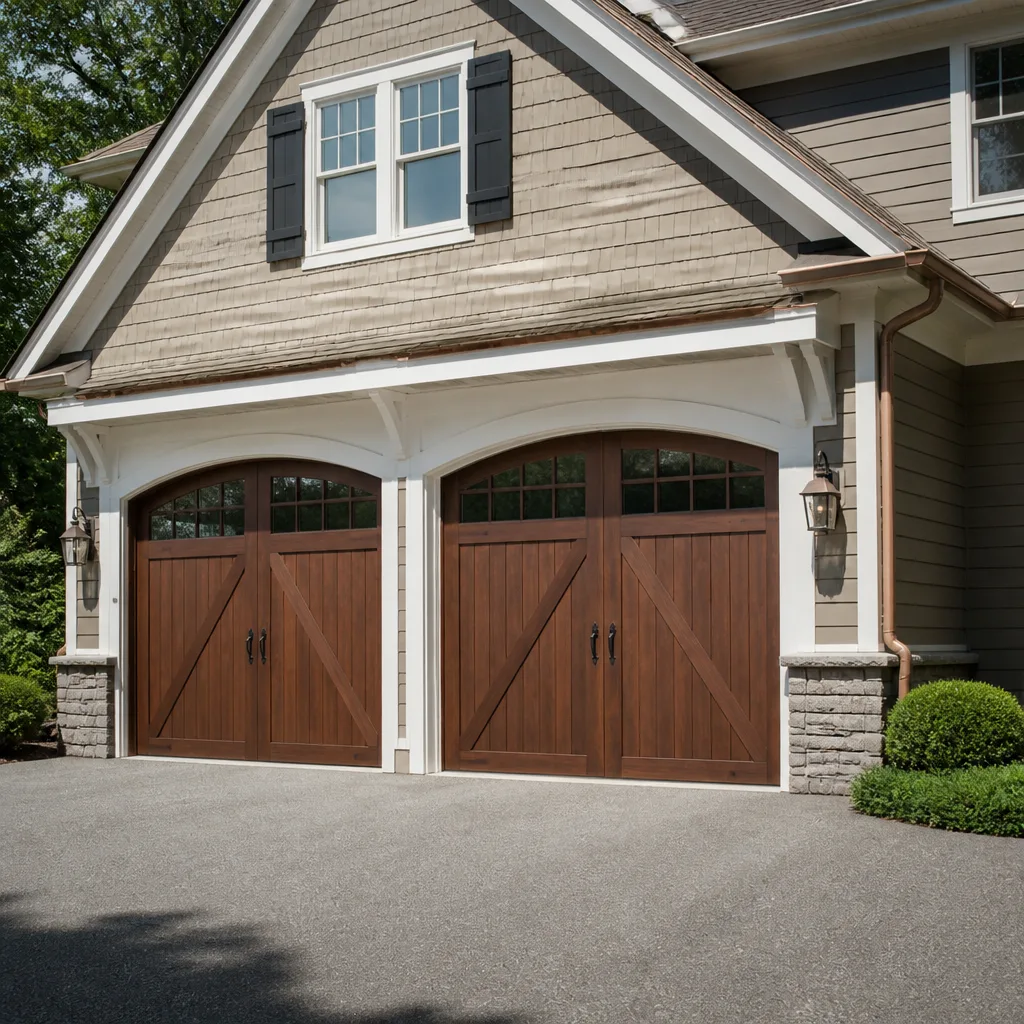 Carriage house
 Modern flush
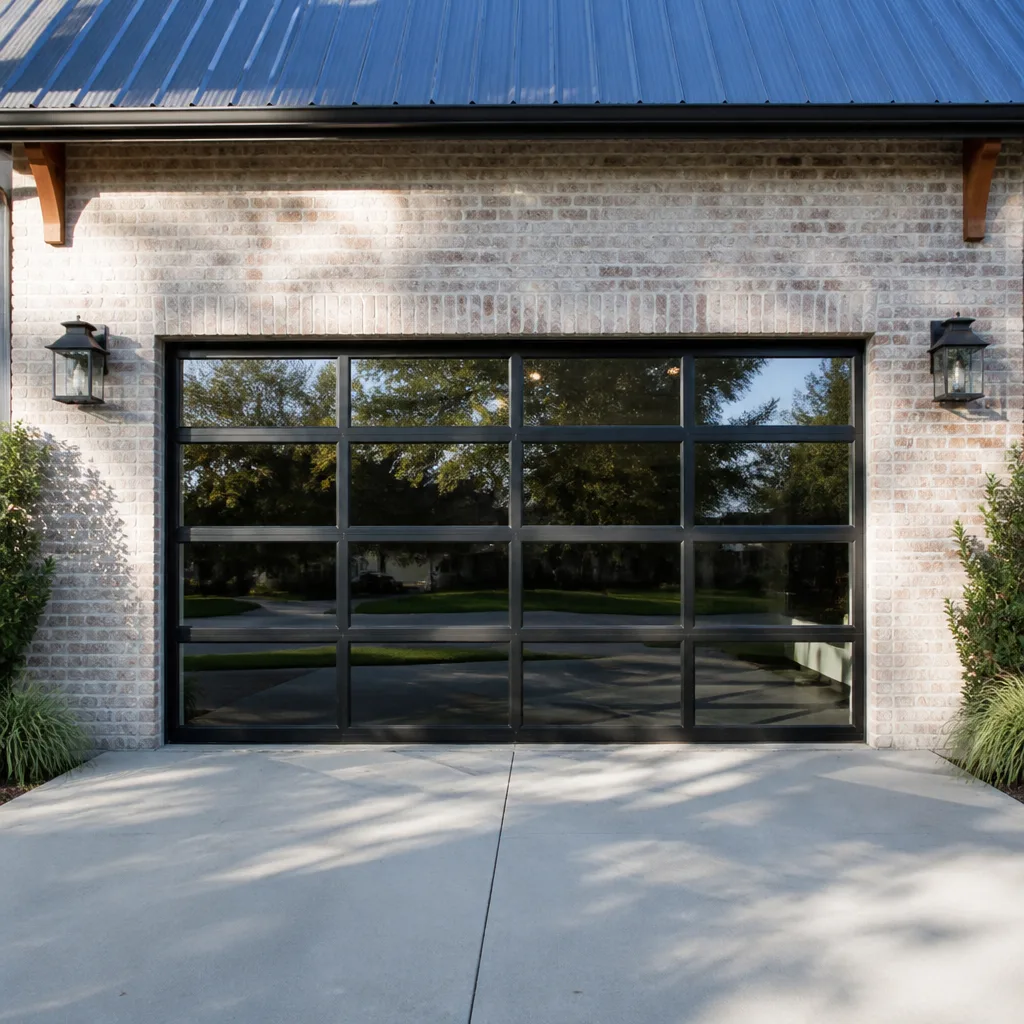 Full-view glass
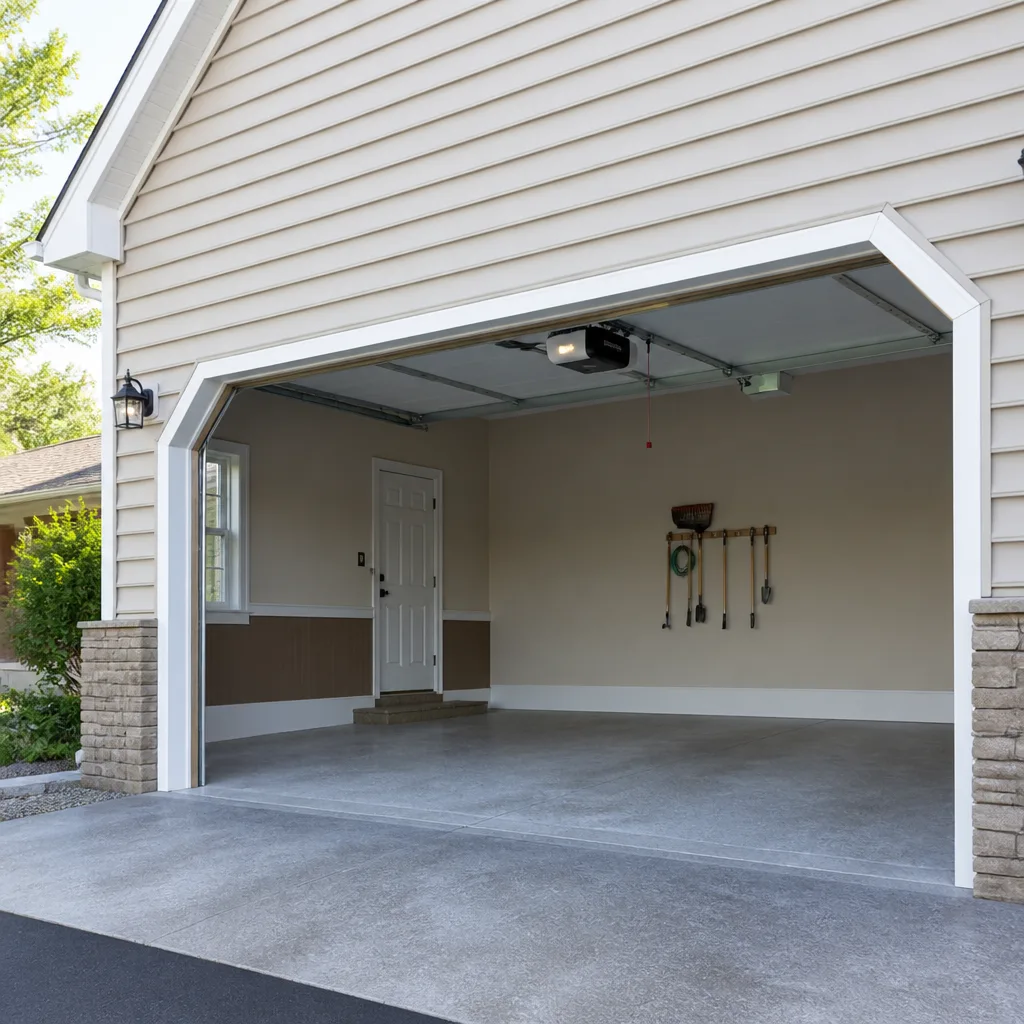 LiftMaster openers
 Chamberlain openers
Full 25-point door and opener safety check with every visit - springs, cables, rollers, tracks, and your LiftMaster or Chamberlain opener included
You get a price before we start. It does not change when the pro arrives.
Get your free estimateGarage Door Repair Maintenance Checklist for Deerfield Beach Homeowners
The part Deerfield Beach homeowners check least often, the bottom weatherseal, is the one that quietly does the most damage when it fails. A worn seal lets humid air and driven rain sit against the bottom panel, and that moisture corrodes the door from the inside out, where you never see it until the metal is already soft. Most maintenance lists are written for a generic climate and ignore the fact that the components around here wear in a different order. This checklist is sequenced by how often things actually fail in Deerfield Beach, not alphabetically, and it covers monthly, quarterly.
Quick Answer
A garage door maintenance checklist for Deerfield Beach should cover the bottom weatherseal first, then springs and cables, then the opener and safety sensors, and then the tracks and rollers, in that order of failure frequency. Check the door visually once a month, lubricate moving parts every three months, and have the whole system inspected by a technician once a year. Keeping a simple written record of spring cycle counts, install dates, and past service lets any technician assess the door accurately instead of guessing.
Styles & brands we work with
- Raised-panel steel
- Carriage house
- Modern flush
- Full-view glass
- LiftMaster openers
- Chamberlain openers
Table of Contents
- Monthly Tasks: What to Check in Ten Minutes
- The Weatherseal Comes First in Deerfield Beach
- Reading Early-Stage Rust on Torsion Springs
- Why Lubricant Choice Matters in Humid Air
- Sensor Drift and Afternoon Track Expansion
- Quarterly Tasks: Lubrication, Rollers, and Balance
- Annual Tasks and Professional Inspection
- What to Record and Keep on File
Monthly Tasks: What to Check in Ten Minutes
A monthly check of a garage door in Deerfield Beach should take about ten minutes and rarely needs any tools. The goal is catching small wear before it turns into a job: a seal that’s starting to pull away, a roller that’s grinding, a sensor that’s been nudged out of line. If you rely on your garage door as your main entrance, as many homeowners in Deerfield Beach do, these short checks are the difference between a quiet door and a surprise.
- Look at the bottom weatherseal. Run your eyes along the full width of the door at floor level. The rubber should sit flat against the concrete with no light visible underneath.
- Listen to the door. Open and close it once and pay attention to sound. A door that used to be quiet and now rattles or squeals is telling you something.
- Test the safety sensors. Wave an object through the beam while the door is closing. It should reverse immediately.
- Check for visible rust. Scan the springs, hinges, and the bottom panel for orange or brown speckling.
- Try the manual release. Pull the red handle and lift the door by hand. It should move smoothly and stay partly open on its own.
What you’re watching for over months, not days, is a pattern. A door that needs a nudge to close, or that hesitates halfway up, is usually the opener or a balance problem, not the door itself. Our experienced technicians can walk you through what a specific noise usually means when you call, and if it turns out you need garage door repair, the estimate will tell you exactly what’s wrong before any work starts.
The Weatherseal Comes First in Deerfield Beach
The bottom weatherseal is the single most overlooked component on a garage door in Deerfield Beach, and it’s the one most likely to cause hidden damage. That flat rubber strip at the base of the door blocks air, water, and insects. When it hardens, cracks, or pulls loose from the retainer, the space it leaves behind lets humid air sit against the bottom panel. That’s where rust begins, and because the bottom section is usually the first place a door’s steel skin fails, the seal is the front line of defense for the whole door.
- What good looks like: pliable rubber, snug against the floor, no gaps or daylight visible at any point along the width.
- What wear looks like: stiff or brittle texture, visible cracks along the fold, rubber flaking off, or a seal that’s pulled away from the aluminum retainer.
- Why it matters here: high humidity and regular afternoon rain are hard on rubber. A seal that would last years in a drier climate degrades much faster in a South Florida garage.
- What to do about it: a bottom seal is one of the cheapest, easiest parts to replace and one of the highest-value maintenance items on the entire door.
Check the seal every month. If it’s starting to stiffen, plan to replace it before the rainy season, not during it. If the bottom panel already shows rust under the seal line, that’s a job to talk to a technician about, because rust that’s creeping up the panel means the moisture problem has been going on longer than you’d think. A new bottom seal is a routine repair, and replacing it early is far cheaper than living with the corrosion it prevents. If you’re not sure whether the seal is still doing its job, our team can take a look at the same time as any other garage door work.
Reading Early-Stage Rust on Torsion Springs
Early-stage rust on a torsion spring shows up as fine orange speckling and a dull, chalky surface texture, usually on the underside of the coils where condensation collects. That’s your earliest visible warning that a spring is losing its coating and heading toward fatigue. Catching it at the speckling stage, before pitting or flaking, is your window to plan a spring replacement on your own schedule instead of after a snap.
Springs are the one part of a garage door system that deserves extra respect. A winding spring is under extreme tension, and a spring that fails while you’re near it can cause serious injury. This is not a DIY job, no matter how handy you are. What you can safely do is look.
What early rust looks like
- Orange or light brown speckles on the coil surface, especially underneath.
- A chalky, dull, or powdery look to what used to be a smooth finish.
- Small flakes of coating lifting off the wire.
- A faint grinding or popping sound when the door runs, distinct from a squeak.
What advanced rust looks like
- Pitting or visible material loss on the coil wire itself.
- Dark brown or black discoloration spreading along the coil.
- A visible gap or stretch in the coil, or a door that feels suddenly much heavier.
- Any spring that has already broken and separated – stop using the door if it can be lifted safely or call for help.
If you spot early speckling, don’t try to wipe it away and move on. That’s the moment to call. Our garage door spring repair service handles the winding safely, and a matched pair of springs is normally replaced together rather than one at a time. Remember that a spring price is always for one spring: when both are replaced, expect roughly double. We’ll confirm the exact figure in a written estimate before anything is touched.
Why Lubricant Choice Matters in Humid Air
In high-humidity climates like Deerfield Beach, lubricant choice matters more than most homeowners realize. The wrong product doesn’t just stop helping; it actively speeds up wear. Petroleum-based sprays, the kind that are cheap and easy to grab off a hardware shelf, tend to attract dust and grit, which then sticks to the rollers and hinges, and the carrier solvents in some of those products can dry out and crack rubber seals. That’s the last thing you need in a garage where humidity is already working against your weatherseal.
- Use a silicone-based lubricant on hinges, rollers, and the spring coils. It doesn’t attract grit the way petroleum products do, and it stays put longer in humid air.
- Keep petroleum-based products away from rubber – the bottom seal, the weatherstripping around the frame, and any rubber bumper. Those products can accelerate seal degradation.
- Wipe the door down first. A clean surface holds lubrication, and a gritty one grinds the coating off.
- Don’t over-lubricate. A light film is enough. Excess grease collects dust and turns into paste.
- Never lubricate the tracks themselves. Tracks are meant to stay dry. Grease in the tracks collects grit, and that grit wears the rollers.
The single most useful habit in a Deerfield Beach garage is a quarterly lubrication pass. Ten minutes with the right lubricant on a Saturday morning protects rollers and hinges for years, and it’s the difference between a door that lasts and one you’re calling about sooner than you should have to be. If you’d rather not deal with it, our technicians can handle the full pass as part of a service visit.
Sensor Drift and Afternoon Track Expansion
Safety sensors that mysteriously stop working in the late afternoon are often a Deerfield Beach-specific issue: metal tracks expand slightly as they heat up in direct western sun, and that expansion nudges the sensor brackets out of alignment. The beam gets broken or blocked, the door refuses to close, and by the next morning everything works again. That pattern – fails in the afternoon, works in the morning – is the signature of thermal drift, not a broken sensor.
How to spot it
- Note the time of day the door stops closing.
- Look at the small LED on each sensor. A solid light usually means the beam is clear; a flickering or off light means it’s misaligned or blocked.
- Check whether the door closes normally in the morning or on a cloudy day.
- Loosen the sensor bracket very slightly, re-aim it, and see if the pattern changes. If it does, you’ve confirmed the issue.
This is a common and fixable problem, but it needs the right fix. If the track is out of alignment because of expansion, re-aiming the sensor won’t hold for long. A technician can check the track spacing and the sensor bracket position so the next hot afternoon doesn’t knock you out of commission. If the door won’t respond at all, or the opener has started acting inconsistently, that’s usually an opener issue rather than a sensor one, and it’s worth calling about garage door opener repair sooner rather than later. We work on LiftMaster, Chamberlain, Genie, and Craftsman units routinely, so the brand on your motor isn’t a roadblock.
Quarterly Tasks: Lubrication, Rollers, and Balance
Every three months, give the door a deeper once-over than your monthly glance. Quarterly tasks are where you head off the expensive repairs before they start, and they’re all things a homeowner can physically do or easily schedule with a technician. In Deerfield Beach, where the door runs more often than in a colder climate, three months of daily use adds up quickly.
- Lubricate hinges, rollers, and the spring coils with a silicone-based product. One light film, no drips.
- Inspect every roller. Steel rollers wear flats and get noisy. Nylon rollers are quieter but crack. Replace any that wobble or grind.
- Test the balance. With the door disconnected from the opener, lift it halfway and let go. It should hold where you leave it. If it drops or climbs, the springs are out of balance.
- Check the hinges for cracks or looseness. A hinge that’s losing a screw can shear the panel around it.
- Look at the cables. Fraying, kinks, or slack in the lift cables are a warning sign. Don’t touch them, just note it and call.
- Tighten visible bolts on the brackets and hinges. Vibration loosens them over time.
Balance is the single most useful test on the whole door. A door that doesn’t hold its position is one that’s working against a tired spring, and that extra strain runs right through the opener motor as well. If you’re not comfortable with any of these checks, our Deerfield Beach Garage Door Repair Co team can run the full quarterly pass as part of a service visit, including the parts of the system you should never touch yourself.
Annual Tasks and Professional Inspection
Once a year, a garage door should get a full professional inspection, and in Deerfield Beach that inspection should include the springs, cables, and torsion system that you should never handle yourself. A technician can measure spring tension, check the cable drums and any worn bearings, look over the opener’s internals, and assess the panels for hidden damage. That’s the maintenance you can’t do at home, and it’s the reason an annual visit makes the other eleven months calmer.
What the annual visit typically covers:
- Spring tension and condition – including the rust scan no homeowner can safely do at close range.
- Cable, drum, and bearing inspection – wear items that fail without warning when they’re neglected.
- Panel assessment – catching hidden corrosion before it compromises the door.
- Opener service – checking the log of cycles, the force settings, and the motor condition.
- Track alignment – the fix for thermal drift before the next hot season.
- Weatherseal replacement – the single highest-value item on the whole checklist in this climate.
Booking the inspection before the rainy season is the practical move. If the door is showing signs it needs more than a tune-up, or you’re considering a new one entirely, we also handle garage door repair and replacement, and the estimate is free. The written price is agreed before any work begins, so there are no surprises when the bill arrives.
What to Record and Keep on File
The most useful maintenance habit in a Deerfield Beach garage is keeping a simple written record of your door, because a technician who knows the history can give you an accurate assessment in minutes instead of an hour. Keep it on the wall next to the opener or in a notes app, and update it after every service call or DIY pass.
- Door make and model – the brand and model number from the label on the door or opener. Craftsman, Raynor, and LiftMaster units all have identifying labels; grab a photo of it.
- Install date – when the door or opener was installed or last replaced.
- Spring cycle count – most springs are rated in cycles, and knowing roughly how many yours has run tells a technician whether replacement is close.
- Service history – what was replaced and when. Even a rough note is better than nothing.
- Lubrication dates – when you last oiled the moving parts and with what.
- Sensor adjustments – any time the sensors have been re-aimed or moved.
With those six items on file, any technician can step in and quickly understand the door’s condition. It also means you can say “the spring is original” or “the opener was replaced three years ago” with confidence. Those details save time on the visit, and often save you money on the estimate because the technician doesn’t have to guess. Our technicians have up to 15 years of experience, and a solid service record is one of the best tools we can be handed.
Common Mistakes to Avoid
- Ignoring the bottom seal until the panel rusts. In Deerfield Beach’s humidity, a stiff seal is a moisture trap. Check it monthly and replace it early rather than living with the corrosion it causes.
- Using petroleum-based lubricant on moving parts and rubber. It attracts grit and can degrade seals. Stick to silicone-based products and keep petroleum products off the rubber entirely.
- Lubricating the tracks. Grease in the tracks collects every speck of grit in the garage and wears the rollers down. Tracks stay dry.
- Assuming sensor drift is a sensor failure. A door that fails to close in the hot afternoon and works the next morning is usually suffering from thermal expansion of the track, not a bad sensor. Re-aiming the sensor won’t fix it.
- Trying to adjust or replace a torsion spring. The tension in a wound spring can cause serious injury. This is the one job that has to go to a trained professional, every time.
- Putting off a balance check. A door that no longer holds its position is working its springs and opener hard on every cycle. Catch it early and both last longer.
- Throwing away the manual and forgetting the model number. Without it, a technician spends time identifying parts you could have told them about in thirty seconds.
See the difference
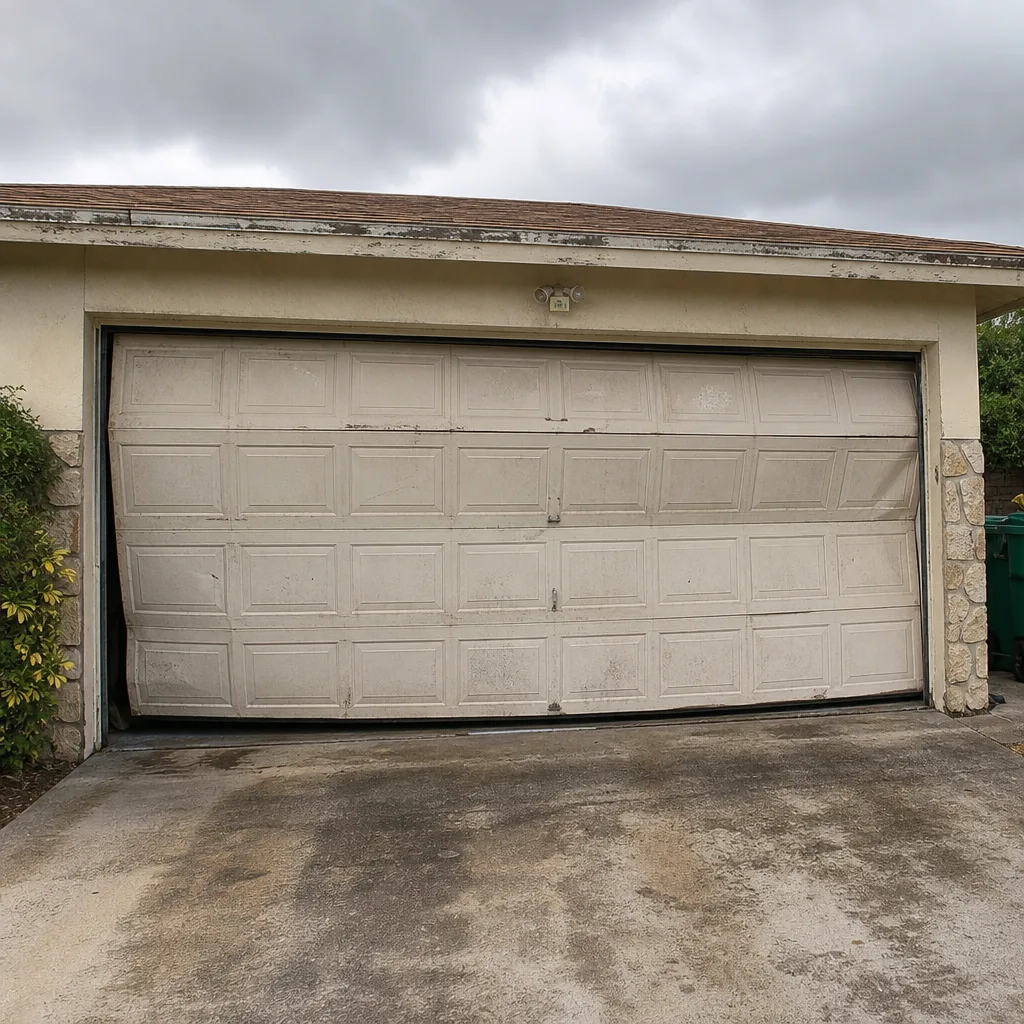 Before
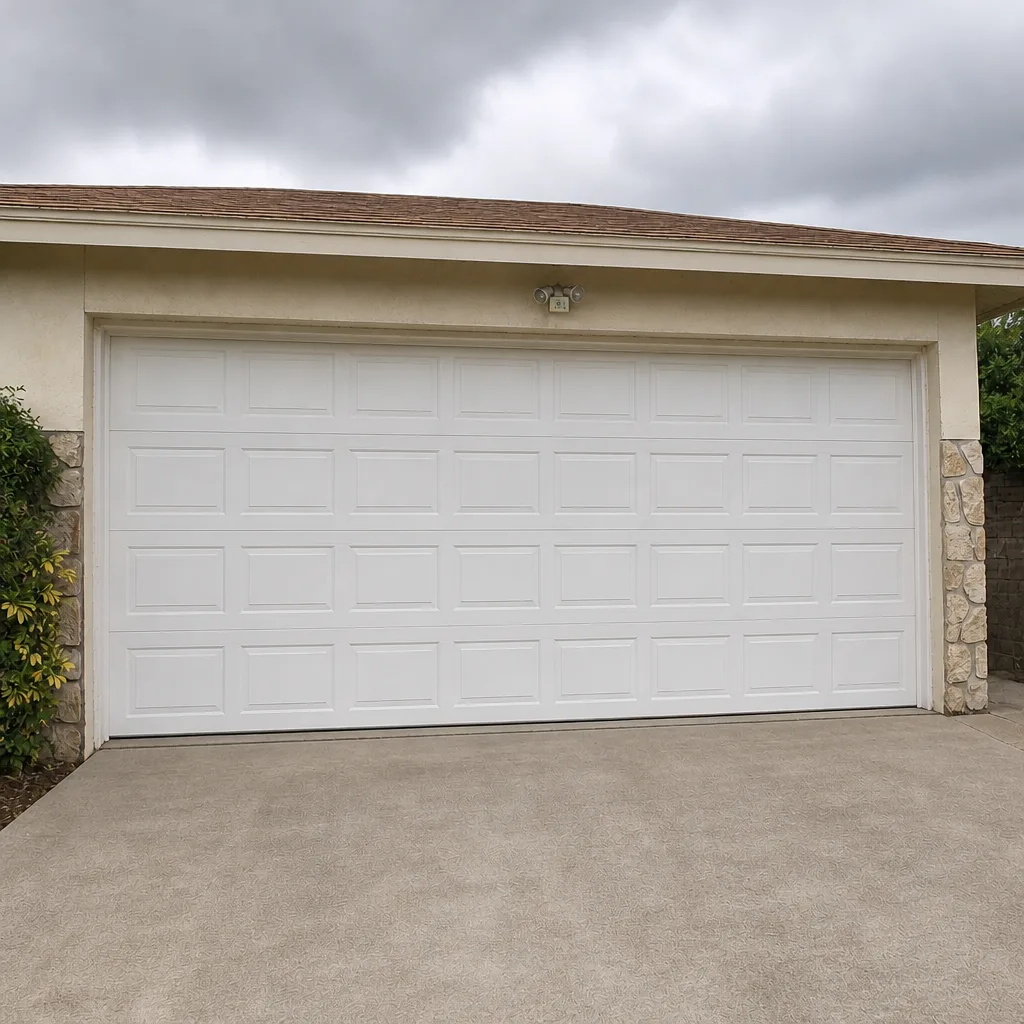 After
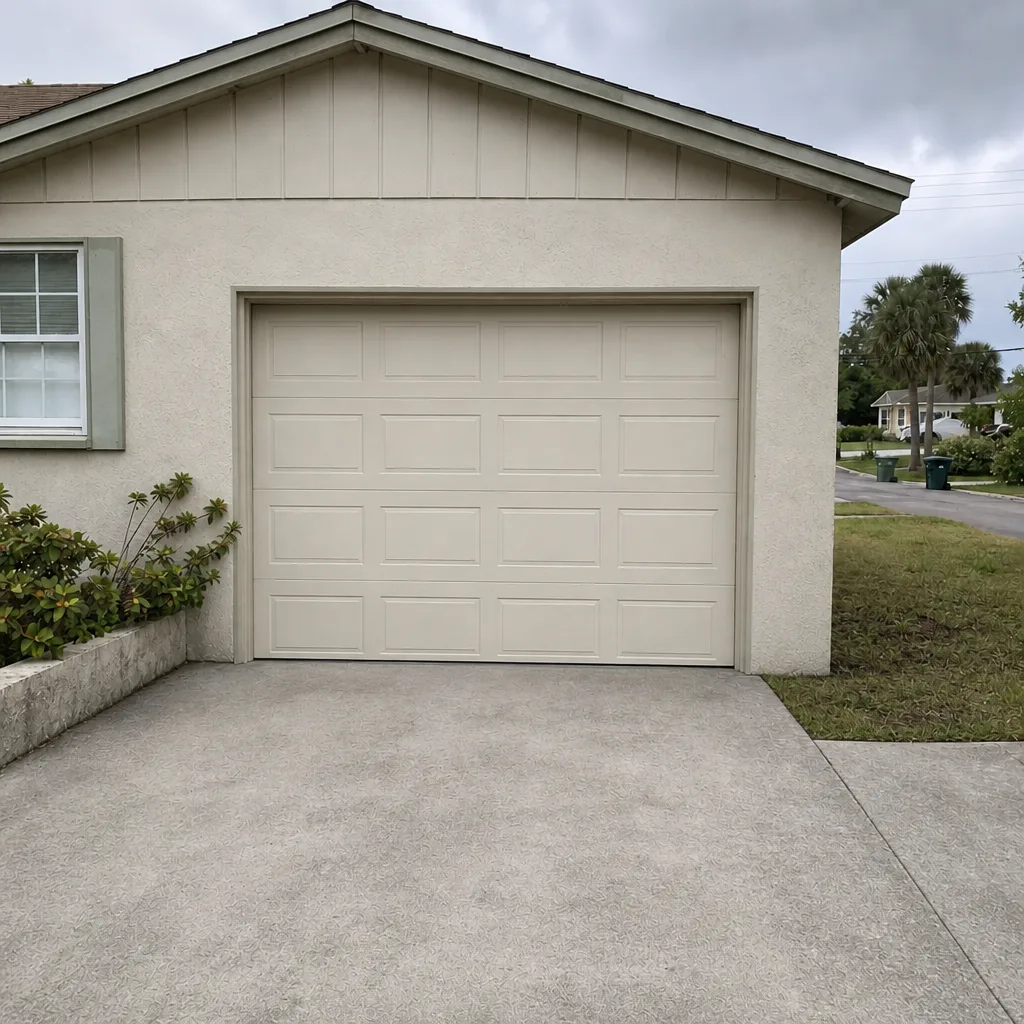
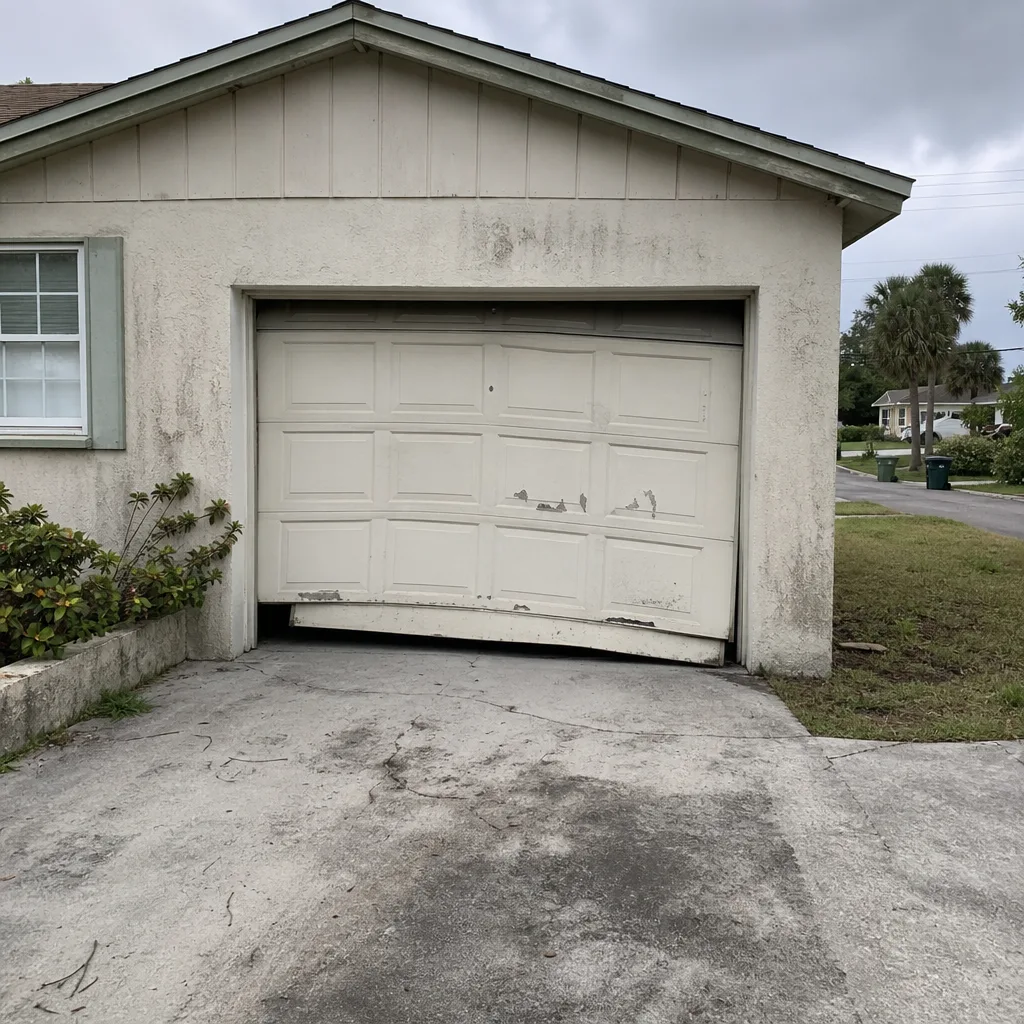 Before
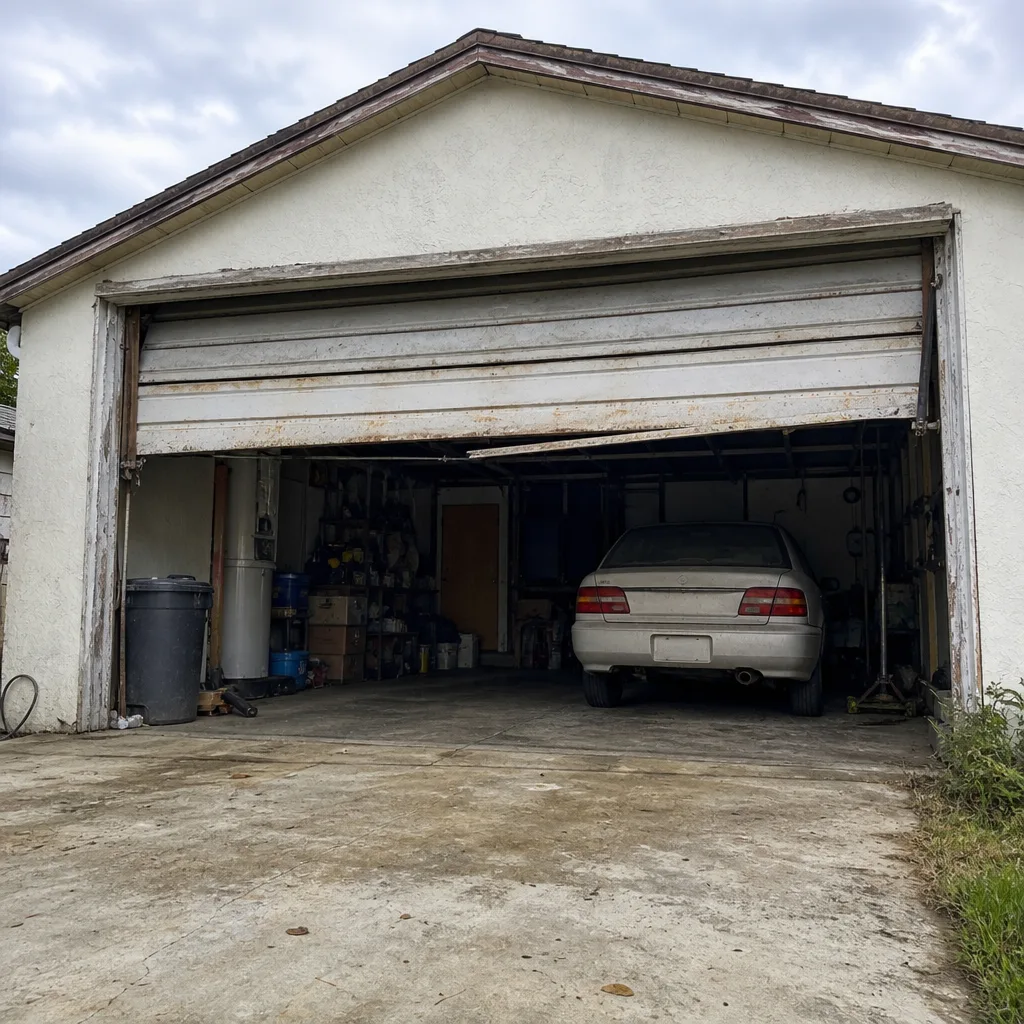
 After
 Before
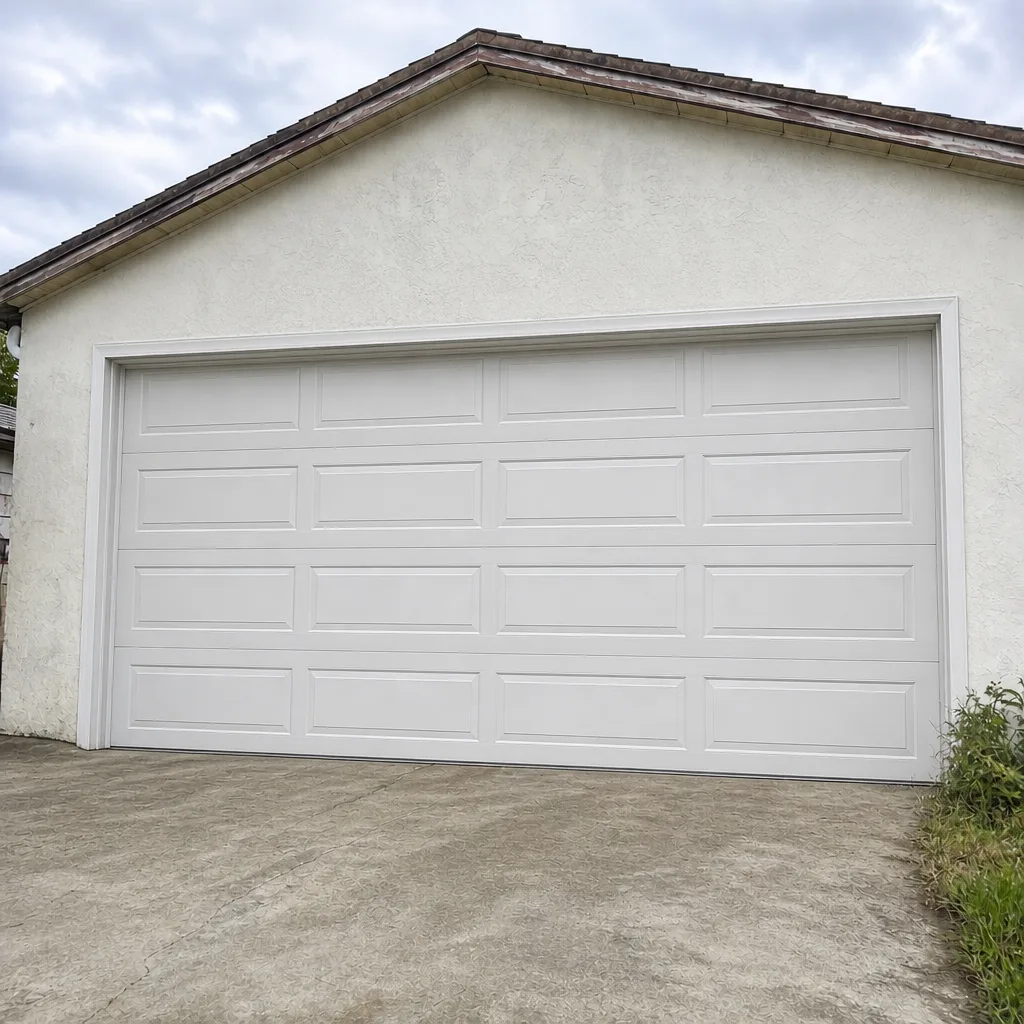 After
When to Call a Professional
Some jobs belong in a homeowner’s hands, and some simply don’t. Call us when you hear a pop or snap from the spring area, when the door is visibly out of its tracks, when the cables are frayed or loose, when the opener runs but the door doesn’t move, or when the door has become noticeably heavier to lift. Those are the situations where a trained technician needs to be on-site. We also handle full opener repair and installation if you’re upgrading the motor, and we service both the door system and the opener as separate, named services so you know exactly what you’re getting. Deerfield Beach Garage Door Repair Co offers free estimates in Deerfield Beach. Call (866) 937-7969. We answer 24/7. Fast dispatch, 7am-7pm, Sunday through Friday.
Frequently Asked Questions
A garage door in Deerfield Beach should be checked visually once a month, lubricated every three months, and professionally inspected once a year. The annual inspection is the one that catches spring, cable, and opener problems before they turn into failures. If the door is used as a primary entrance, keep to that schedule rather than stretching it. Call (866) 937-7969 to book an inspection – estimates are free.
The bottom weatherseal is the first thing to check. It’s the component most homeowners overlook and the one that protects the bottom panel from moisture damage. A stiff, cracked, or loose seal lets humid air sit against the steel and rust begins from the inside out. If the seal is failing, replace it before the rainy season. That single part does more for the door’s lifespan than almost anything else you can do.
Early-stage rust shows as fine orange speckling and a chalky texture on the coil, usually on the underside where condensation collects. Pitting, flaking, or a sudden heaviness in the door means the spring is close to failing. If you see either, stop using the door if it feels unsafe and call a technician. Do not try to inspect a spring at close range or attempt any repair yourself. Call (866) 937-7969 and we’ll take a look safely.
In Deerfield Beach, an afternoon-only failure is usually sensor drift caused by thermal expansion of the metal tracks from direct western sun. The tracks grow slightly in the heat and nudge the sensor brackets out of line. If the door works again the next morning, that’s the signature. A technician can adjust the track spacing and sensor bracket so it holds through the heat. Call (866) 937-7969 to get it checked before the next hot season.
Use a silicone-based lubricant on the hinges, rollers, and spring coils, and keep petroleum-based sprays away from rubber seals and weatherstripping. Petroleum products attract dust and grit that speeds up wear, and their solvents can dry out and crack rubber. Apply a light film when you lubricate, roughly quarterly. Never lubricate the tracks themselves – they’re meant to stay dry. If you’d rather have a professional handle it, call (866) 937-7969.
Yes. A record of the door and opener make and model, the install date, the approximate spring cycle count, service history, and lubrication dates lets a technician assess the system quickly and accurately. That saves time on the visit and often saves money on the estimate. Even rough notes beat nothing. If you don’t have a record, a technician can start one for you during a service call. Call (866) 937-7969 for a free estimate.
The Bottom Line
The parts that fail first on a Deerfield Beach garage door are the bottom weatherseal, the springs, and the safety sensors, and that’s the order the checklist should follow. Check the seal monthly, scan the springs for early rust speckling, watch for afternoon-only sensor failures, and keep petroleum products away from the rubber. Lubricate with silicone every three months, test balance at the same time, and book a professional inspection once a year before the rainy season. Keep a written record of the door and opener so any technician can work from facts rather than guesswork. The result is a door that stays quiet, stays safe, and stays out of your budget for the things that actually matter.
Written by the team at Deerfield Beach Garage Door Repair Co.