
Last updated November 23, 2026
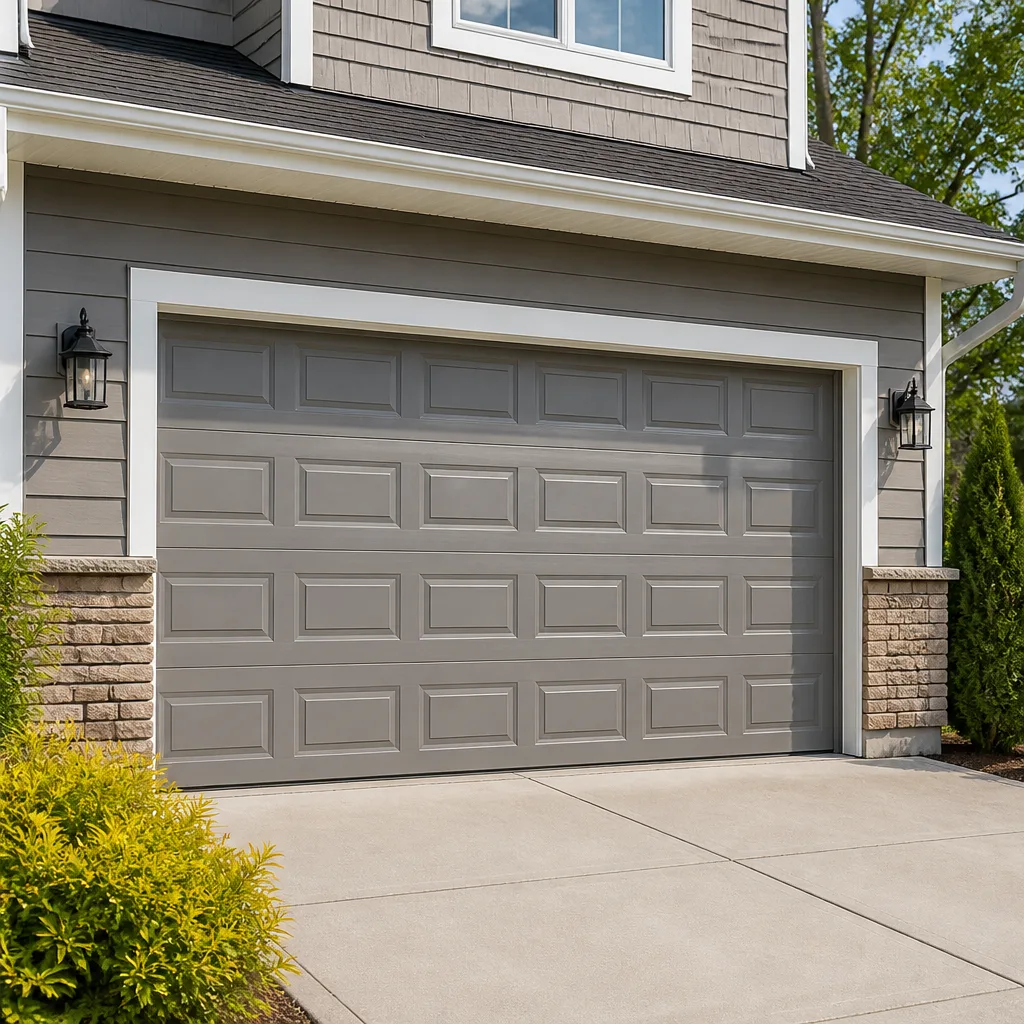 Raised-panel steel
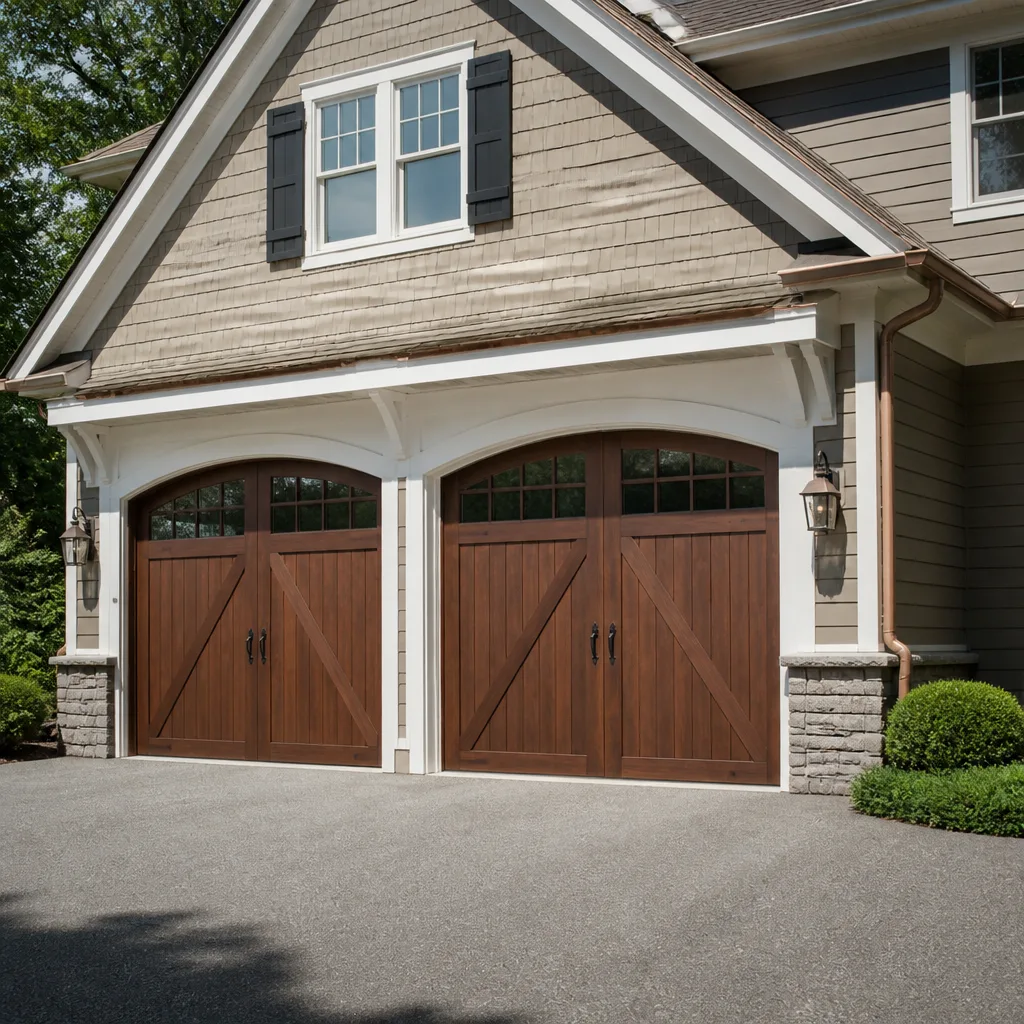 Carriage house
 Modern flush
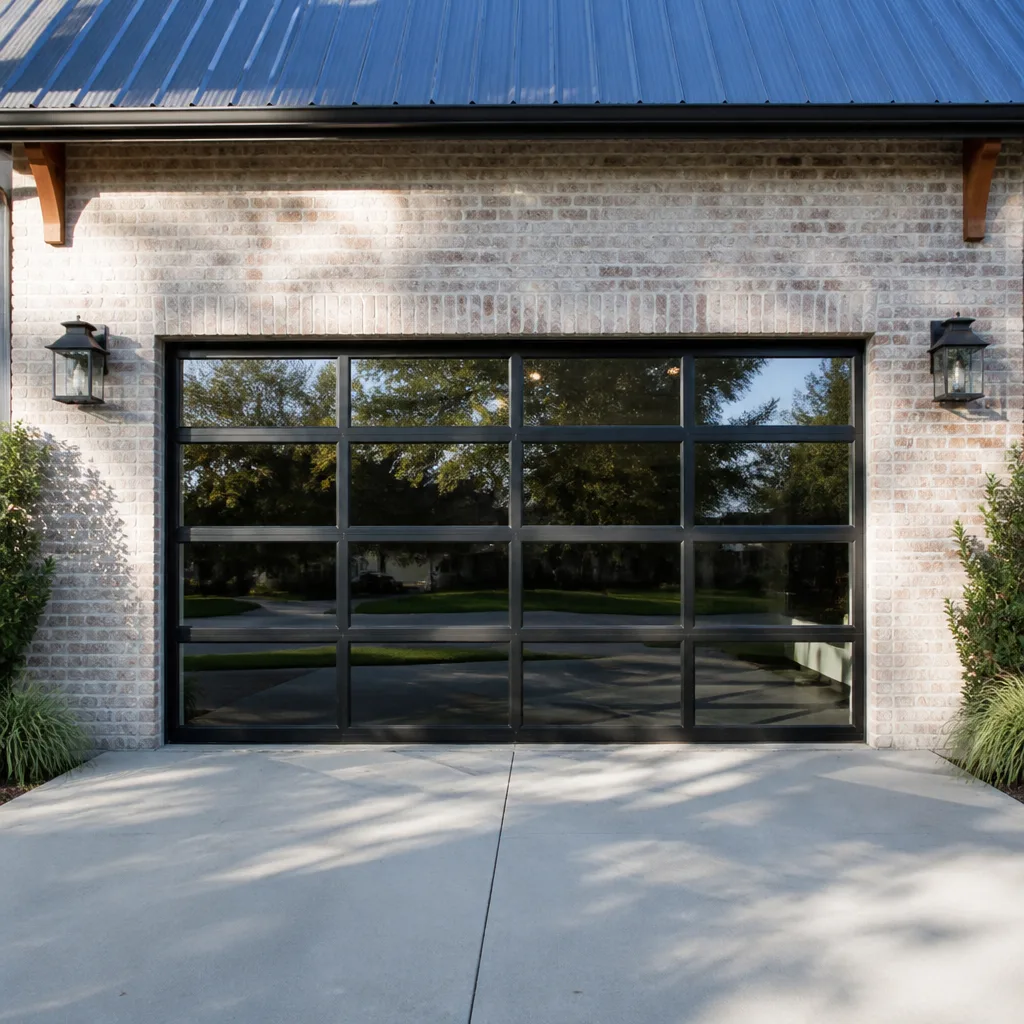 Full-view glass
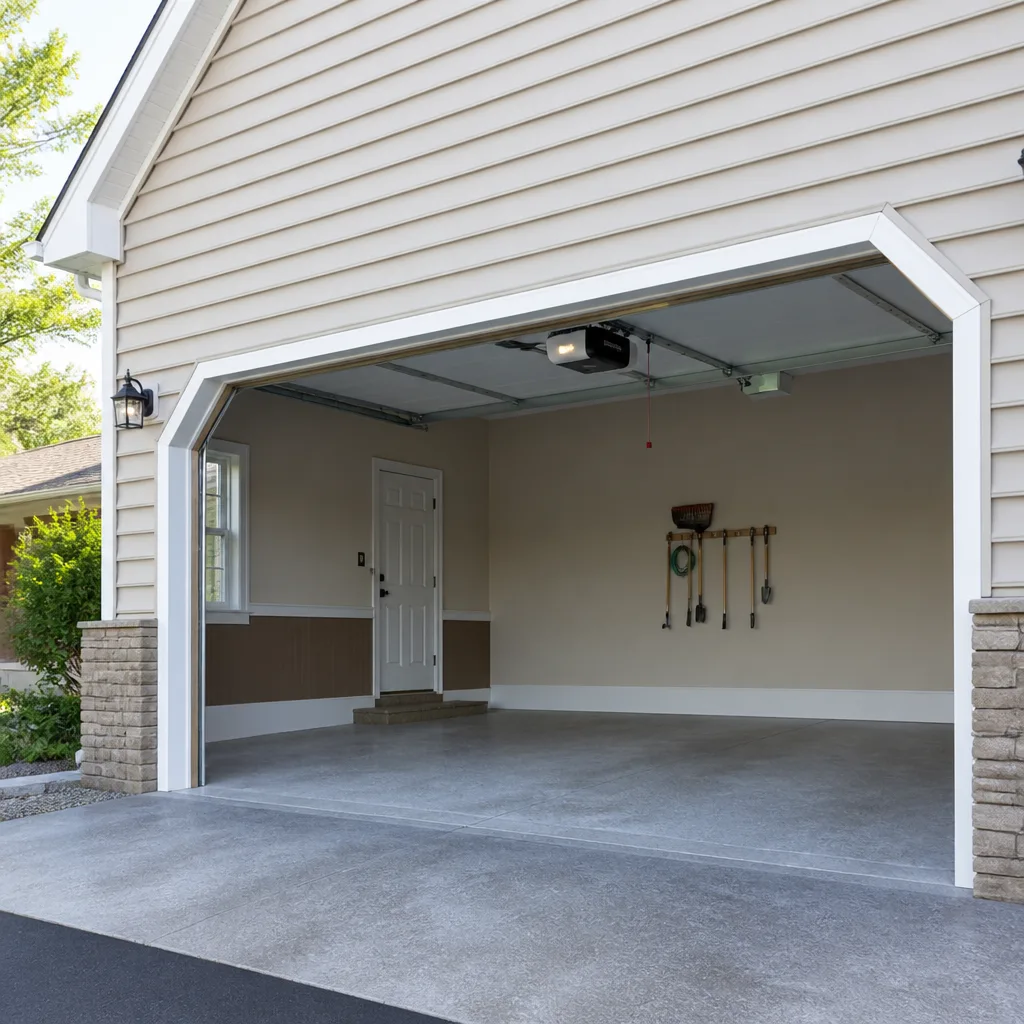 LiftMaster openers
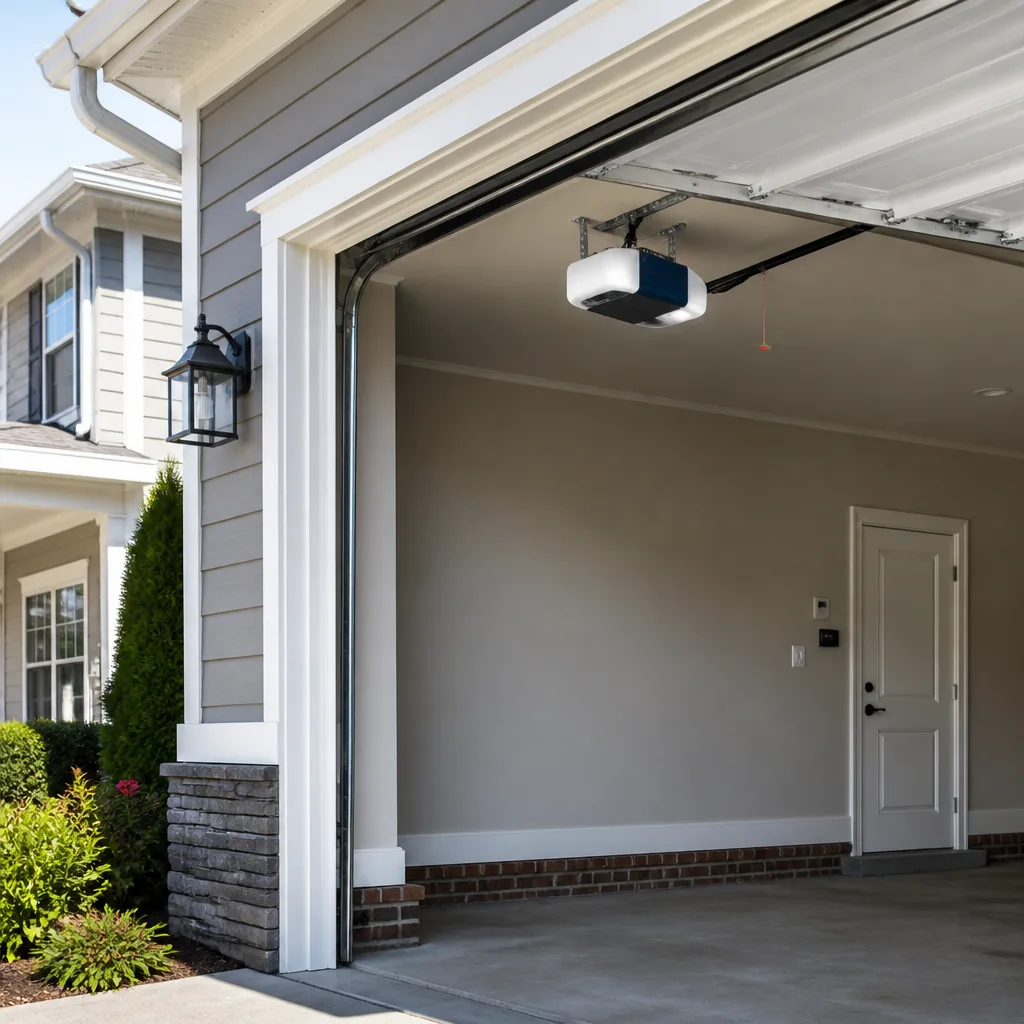 Chamberlain openers
Full 25-point door and opener safety check with every visit - springs, cables, rollers, tracks, and your LiftMaster or Chamberlain opener included
You get a price before we start. It does not change when the pro arrives.
Get your free estimateHow to Hire a Garage Door Contractor in Deerfield Beach: A Step-by-Step Guide
Most homeowners in Deerfield Beach vet a garage door contractor by comparing three quotes and picking the middle one. That’s the wrong instinct for this trade. The real question isn’t whether the price looks fair; it’s whether the person standing under a torsion spring carrying 200 pounds of stored tension has the credentials to be there, and the coverage to make you whole if the door comes down on a car or a wall. Florida doesn’t require a dedicated garage door contractor license, so a handyman registration can look identical to a specialist’s paperwork from the outside. This guide walks through the verification process step by step, plus the five questions that separate a true garage door specialist from a generalist filling a gap.
Quick Answer
Hiring a garage door contractor in Deerfield Beach means verifying three things before anyone touches your door: the contractor’s active license record through the state or Broward County database, a current liability insurance certificate that names garage door work, and written proof of a workers’ compensation policy. Then ask whether they specialize in garage doors specifically, whether they stock and name specific spring brands, and whether they provide an itemized written scope. Price comes last, and it never comes before verification.
Styles & brands we work with
- Raised-panel steel
- Carriage house
- Modern flush
- Full-view glass
- LiftMaster openers
- Chamberlain openers
Table of Contents
- Why Credential Verification Matters More Than Price
- How to Look Up a Contractor’s License and Insurance in Broward County
- The Five Questions to Ask Before Scheduling an Estimate
- Why Same-Day Emergency Quotes Deserve More Scrutiny
- Red Flags Specific to Garage Door Contractors
- How to Structure a Written Scope of Work That Protects You
- Specialist vs. Generalist: What the Difference Costs You
- Common Mistakes to Avoid
Why Credential Verification Matters More Than Price in Deerfield Beach
Garage doors in Deerfield Beach fail in ways that other home systems don’t. Our humid subtropical climate keeps wood and steel panels wet for months, softens track anchors, and shortens the life of opener logic boards and photo-eye sensors. A door that looked fine in March can drop in August. When it does, the work required to fix it safely is mechanical, precise, and fundamentally hazardous.
The reason credentials come first is simple arithmetic. A torsion spring at rest may hold hundreds of pounds of stored energy. If a technician cross-threads a set screw or winds the spring short, that energy releases into whatever is underneath: the door itself, your vehicle, the stucco wall of your garage, or the technician. A homeowner’s typical response is to check the contractor’s website for reassurance, but a website proves nothing. It’s a marketing document.
Here’s what a credential check actually protects:
- Your vehicle and structure. A dropped or out-of-balance door can damage a car hood, crack a slab, or tear a frame. Liability coverage pays for that; a handyman policy often excludes garage door work entirely.
- Your own liability. If an uninsured helper is injured in your driveway, your homeowner’s policy can become the target.
- Your future problem. A poorly balanced door or a mismatched spring pair will fail prematurely. If the contractor can’t be found, you eat the cost of a second repair.
In our experience, most homeowners spend forty minutes comparing prices and four minutes checking credentials. Flipping that ratio is the whole point of this guide.
How to Look Up a Garage Door Contractor’s License and Insurance in Broward County
Florida does not issue a garage door contractor license as a standalone credential. Garage door work typically falls under a general contractor or a specialty structure classification, which means the correct licensing depends on the scope of the job. That ambiguity is exactly why you have to check the record yourself instead of trusting a badge on a website.
Two sources carry the weight here. The state Department of Business and Professional Regulation (DBPR) runs a licensing portal where you can search by individual name, business name, or license number. Broward County’s records office maintains its own database of local business tax receipts and county-issued credentials. Both matter.
Step-by-step lookup
- Ask for the license number in writing before you schedule anything. A legitimate contractor will supply it without hesitation. If they dodge or say “we’re licensed,” move on.
- Search the DBPR portal at myfloridalicense.com. Enter the license number and check: status (active vs. inactive or suspended), expiration date, the qualifying individual’s name, and the license category. If the job is a full installation, confirm the category covers it.
- Search Broward County’s business records for the local tax receipt. Confirm the business name matches the invoice exactly. A mismatch between the company you’re talking to and the entity on file is a red flag worth a pointed question.
- Request a Certificate of Insurance directly from the carrier, not from the contractor. The certificate should list a general liability policy with an active date range and a policyholder matching the contracting entity. Ask whether the certificate names your specific address or whether it’s a blanket policy.
- Confirm workers’ compensation separately. A certificate that only lists general liability is incomplete. If the company has employees, they need a workers’ comp policy; if they’re a sole proprietor with exemption status, ask for that exemption form.
- Verify the coverage applies to garage door work. This is the item almost nobody checks. Ask the agent explicitly: does this policy cover garage door installation, spring replacement, and opening repair? Some handyman policies silently exclude structural door work.
Do this in the same session you collect quotes. It takes about ten minutes once you have the numbers, and it eliminates the most expensive category of mistake in this trade.
The Five Questions to Ask Before Scheduling an Estimate
A garage door specialist and a generalist can look the same on a website. The difference shows up in about ninety seconds on the phone. These five questions are designed to be asked before you ever agree to a visit.
1. “Do you handle spring replacement as a named service?”
Some shops don’t advertise spring work at all because it’s the most technically demanding call in the trade. A contractor who names spring work as a core service and can describe the difference between torsion and extension systems off the top of their head is a genuine specialist. A contractor who says “we can look at it” is hedging.
2. “Which door and opener brands do you work on regularly?”
Ask this open-ended, without prompting. A specialist will rattle off real names: LiftMaster, Chamberlain, Genie, Clopay, Amarr, Wayne Dalton, Craftsman, Raynor. A generalist will list “most brands” and stumble on the specifics. See how they describe garage door opener repair in particular. If they can describe how a Genie safety sensor differs from a LiftMaster unit’s setup, you’re talking to someone who actually works on the equipment.
3. “What spring brand do you stock, and will you show me the part before installation?”
A contractor with nothing to hide will name the spring manufacturer before you ask, and will confirm you’ll see the parts. One who refuses, or says “we use whatever our supplier sends,” has no control over the quality of what goes in your door.
4. “Is the quote itemized, and what’s the warranty on parts and labor?”
A one-line price for a spring job tells you nothing. You want to see spring cost, labor, cable replacement if needed, and any roller or bearing charges broken out. Warranty should be stated in writing, separately for parts and labor.
5. “Who will actually perform the work?”
Some companies quote a job and send a subcontractor. Ask whether the technicians are employees or subcontractors, and whether the business carries coverage for both. A one-person operation is fine, but the coverage has to be clear for whoever shows up.
If you like the answers, ask about scheduling. If you get evasions on two or more, you’ve found the answer.
Why Same-Day Emergency Quotes Deserve More Scrutiny, Not Less
When a spring snaps at 6am and the car is trapped inside the garage, the instinct is to take the first quote that shows up. That’s precisely when you’re most vulnerable and most likely to get taken advantage of. Pressure is a tool, and some contractors use it.
Here’s what a real specialist does under pressure. They diagnose first. They name the specific failed component. They explain what’s causing the problem in plain language. Then they quote, itemized, and wait for you to say yes. A specialist never asks you to decide in the first five minutes of the visit.
How to evaluate an emergency quote fast
- Ask for the diagnosis in one sentence. “What broke?” If they can’t answer specifically, they’re guessing.
- Insist on a written quote before work starts. Even for an emergency, a professional writes it down or texts a photo of the estimate. No legitimate contractor refuses.
- Ask whether the spring brand is on the invoice. If they won’t tell you the manufacturer, don’t sign.
- Watch for “this whole door needs replacing” on a spring call. Unless the panels are visibly compromised or the frame is gone, a spring failure is a spring call. Full replacement pitches on a spring job warrant a second opinion.
- Check that the licensing paperwork matches the person at your door. If the technician can’t confirm the company name, call the office before you let them begin.
Many emergency calls in Deerfield Beach turn out to be cable failures, broken rollers, or a logic board that needs resetting, not a full spring replacement. A real specialist will rule out the smaller problems first, saving you money on the visit.
Red Flags Specific to Garage Door Contractors
Every trade has warning signs. Garage doors have a few that are uniquely their own, and homeowners ignore them because they don’t work with garage doors on a daily basis.
1. Non-itemized quotes
A quote that says “$450 for spring repair” without showing parts, labor, and warranty isn’t a quote; it’s a number. You can’t compare it to another bid, and you can’t hold the contractor to anything if the final invoice is higher. Ask for a line-by-line breakdown, every time.
2. Refusal to name the spring brand and cycle count
Torsion springs are rated by cycle count, typically somewhere between 10,000 and higher-end ratings. A contractor who won’t name the manufacturer or the cycle rating is either buying the cheapest spring available or hasn’t asked their supplier. Either way, you’ll be back on this page in a few years.
3. Pressure to replace rather than repair
Some components justify replacement: a badly cracked panel, a catastrophic opener failure, a frame that’s been compromised by rot. Most problems are repairable. If the first response to a broken spring or a noisy door is “you need a new door,” get a second opinion.
4. No local phone number, no physical address on the estimate
A business address matters because it tells you where to send a complaint, a legal notice, or a demand letter if the work fails. If the estimate has no address, or only a cell phone number, you have no recourse.
5. Vague or missing warranty language
The warranty on a spring should be specific: what’s covered, for how long, whether parts and labor are separate. A verbal promise doesn’t count. Ask for the warranty in writing on the same document as the scope of work.
6. Refusal to show insurance certificate before the visit
Anyone who hesitates on this is telling you something. Request the certificate and confirm the carrier name and policyholder before the technician arrives in your driveway.
7. No written scope of work at all
If the entire agreement is a text message saying “spring fix, $400,” you’ve got nothing to enforce. A proper scope is covered in the next section.
How to Structure a Written Scope of Work That Protects You
A written scope of work is the only document that protects you if parts fail prematurely or the job turns out to be incomplete. The trick is being specific enough that there’s no room to argue about what was promised. Here’s what belongs in it.
Required elements
- Contractor identification. Full legal business name, license number, business address, phone number, and the name of the qualifying individual on the license.
- Specific work description. Not “repair spring” but “replace one torsion spring, model and brand named; inspect and adjust the second spring; replace cables if inspection shows wear; rebalance door; test opener cycle.”
- Parts specification. Spring brand, cycle rating, and part numbers where applicable. If you have a Clopay or Amarr door, note the manufacturer so the spring specification matches door weight.
- Line-item pricing. Parts, labor, any additional materials, and sales tax, each on its own line.
- Warranty terms. Parts warranty period, labor warranty period, and what voids each. Written here, not verbally promised.
- Payment terms. Total price, deposit amount if any, payment due on completion, and accepted methods. Nothing else.
- Contingency language. A clause stating that any additional work beyond the scope requires your written approval before it’s performed and before any additional cost is incurred.
- Signature line and date. Both parties. A paper trail matters.
If a contractor resists putting any of this in writing, that tells you how they’ll handle a future warranty call. Ask for the scope document before work begins, read it, and don’t let anyone start work until you’re comfortable with what’s on it.
For a full spring replacement, our garage door spring repair team uses a scope document that names the spring brand, the cycle count, and the warranty, every time.
Specialist vs. Generalist: What the Difference Costs You
A generalist handyman can probably replace a set of rollers. What they usually can’t do is diagnose a door that’s binding due to a broken torsion spring and a worn bearing plate in combination, or spot a door that’s out of square because a track anchor has pulled free from moisture-damaged stucco. Specialists do this every day, which means they recognize the pattern in minutes rather than hours.
The cost of hiring a generalist for garage door work falls into three buckets:
- Repeat visits. A misdiagnosed issue is fixed twice. Two visits at $200 each cost more than one visit at $350.
- Parts quality. Generalists often buy the cheapest spring available because they don’t have a brand relationship. That spring typically fails faster than a name-brand equivalent in the same door.
- Safety. Spring work and cable replacement are the two riskiest jobs in the trade. A generalist without proper training is more likely to be injured, and if their insurance excludes garage door work, you’re exposed.
We’re a single-trade specialist; garage doors are all we do. That means we work on doors every day, across brands like Clopay, Amarr, Wayne Dalton, and Craftsman. That’s not a slogan. It’s how the spring brand, cycle rating, and door weight decision gets made correctly the first time. You can read more about our garage door repair services if you want to see the full scope of what we handle, but the hiring decision still rests on the verification steps above, no matter who you choose.
Common Mistakes to Avoid
- Choosing the cheapest quote without verifying credentials. The lowest bid is often the least insured. Two minutes on the DBPR portal tells you whether that’s the case.
- Accepting a phone quote without an on-site inspection. Garage door problems are physical. A quote given over the phone is a guess; a proper estimate requires seeing the door and testing the balance.
- Letting work begin before the written scope is signed. A verbal agreement is worth nothing when the invoice arrives higher than promised. The written document is the whole protection.
- Skipping the insurance certificate check. In Deerfield Beach, where garages often sit under the same roof as the main house, a door that falls can damage roofing, stucco, and vehicles. Verify coverage before anyone touches anything.
- Assuming the lowest cycle-rating spring is fine. A low-cycle spring costs less today and more in a few years. Ask for the cycle rating explicitly.
- Letting a generalist replace a spring without confirming their training. Spring replacement is the highest-risk component of garage door work. If the contractor’s website doesn’t explicitly mention it, ask, and be prepared to walk away if the answer is fuzzy.
- Paying cash without a receipt. Cash is common in this trade for emergency calls. A receipt with the business name and work description is still required.
- Ignoring the second spring. Spring pairs wear together. If one breaks, the other is nearly as old. Replacing only one sets up a second failure. A proper scope of work will address both.
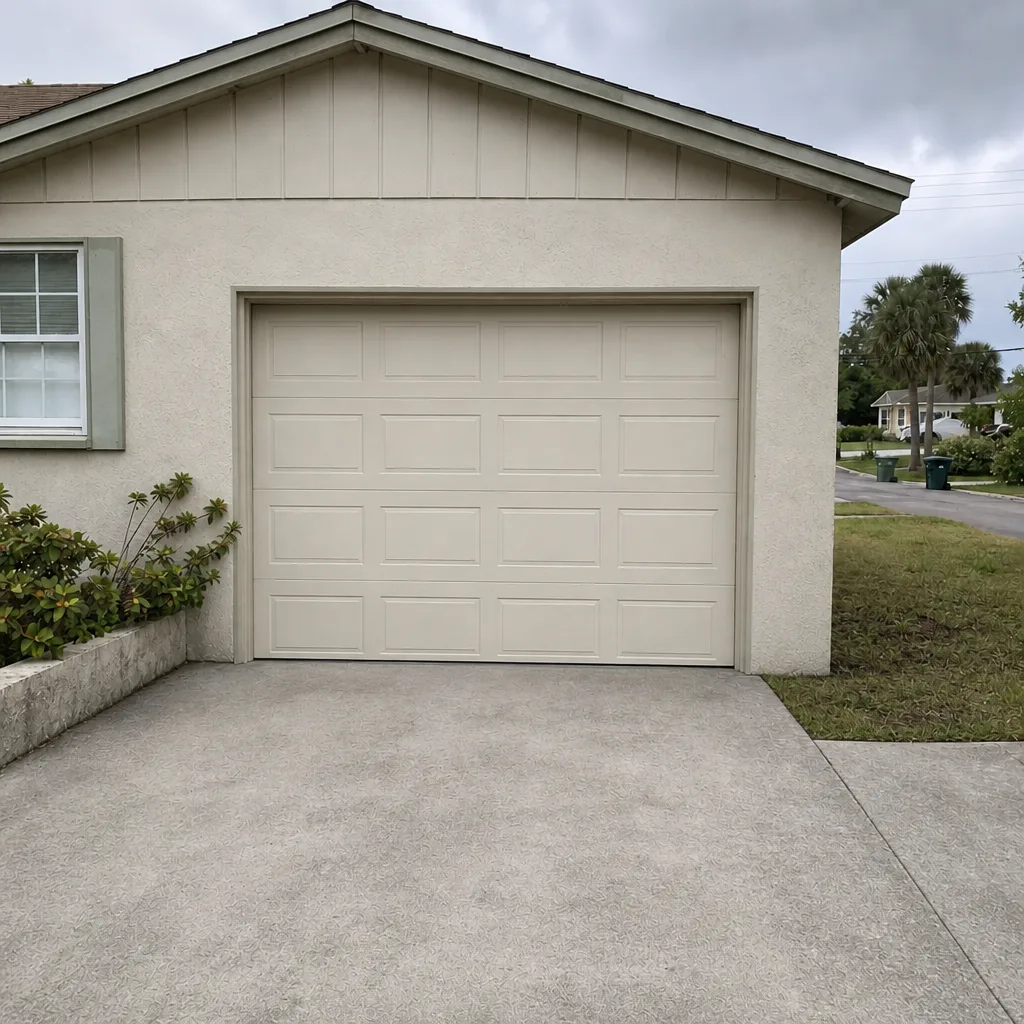
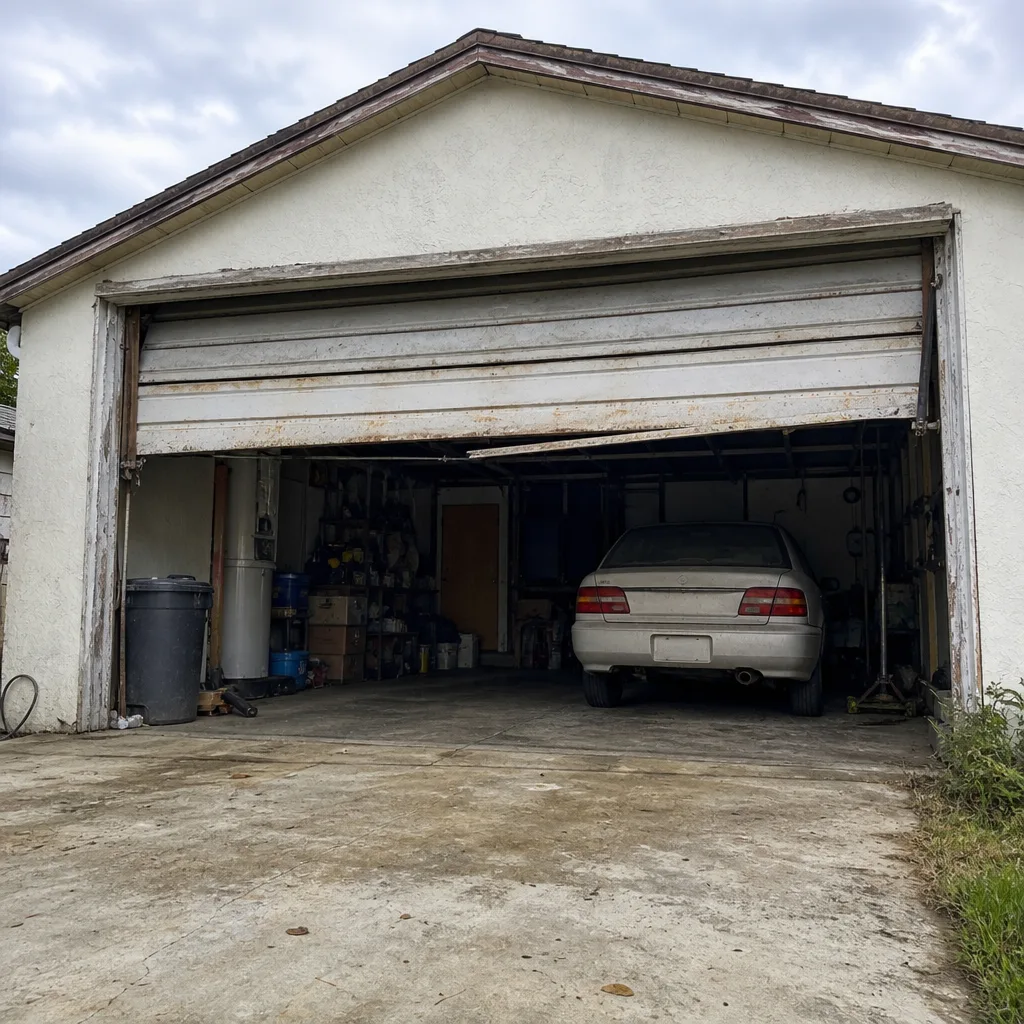
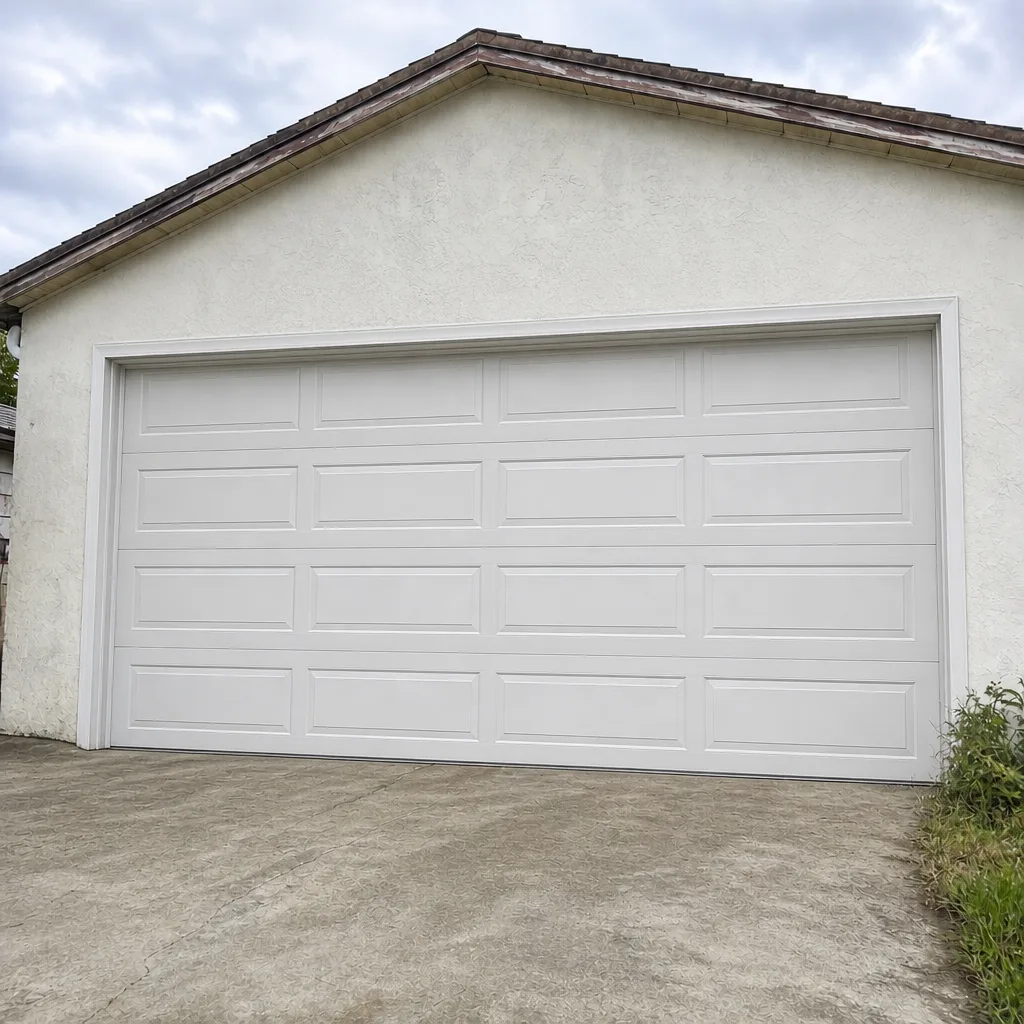
See the difference
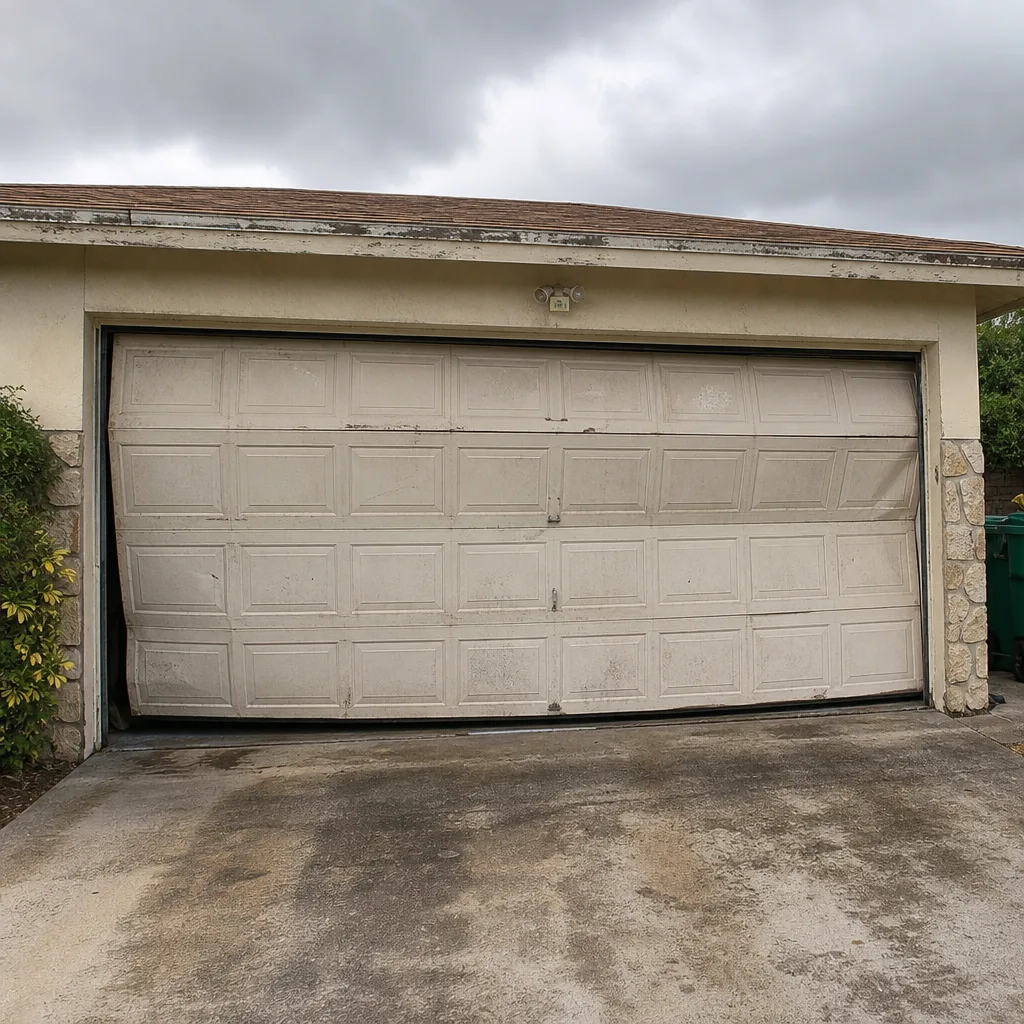 Before
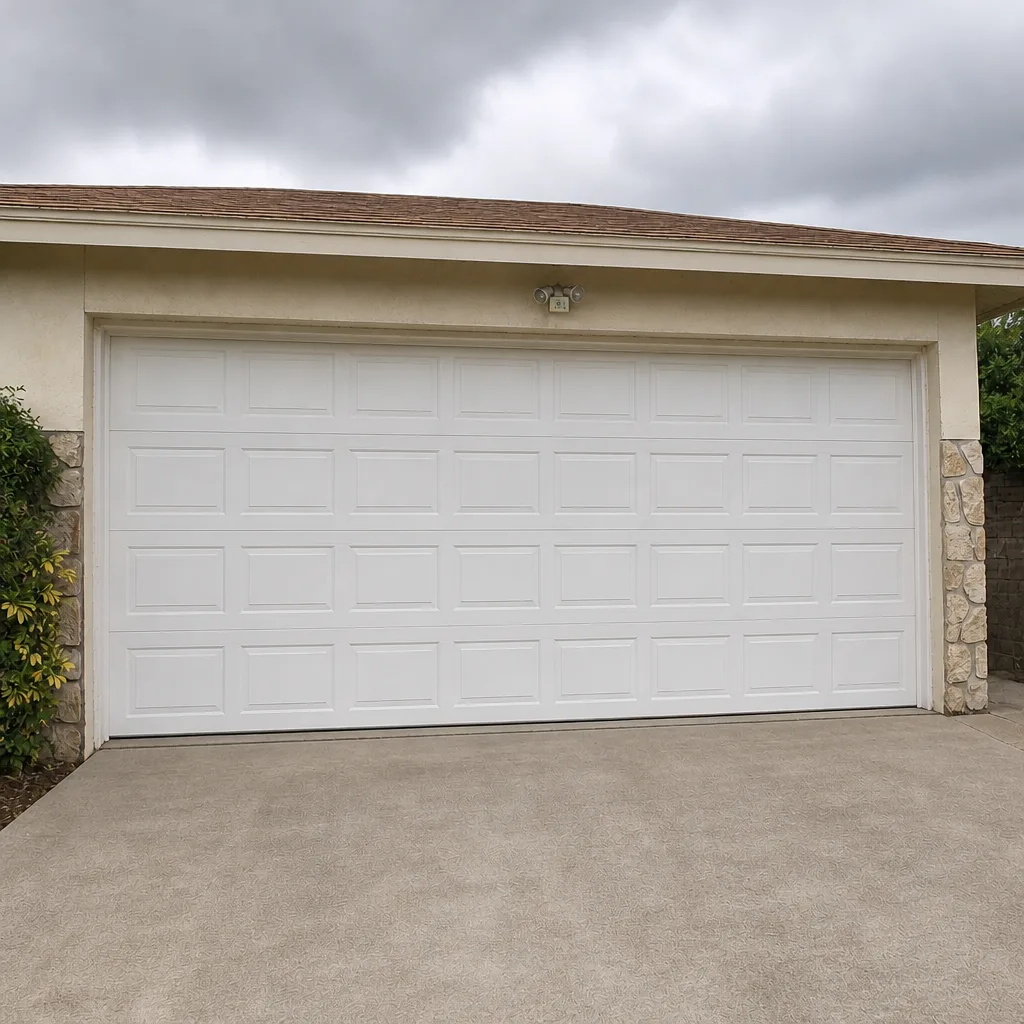 After
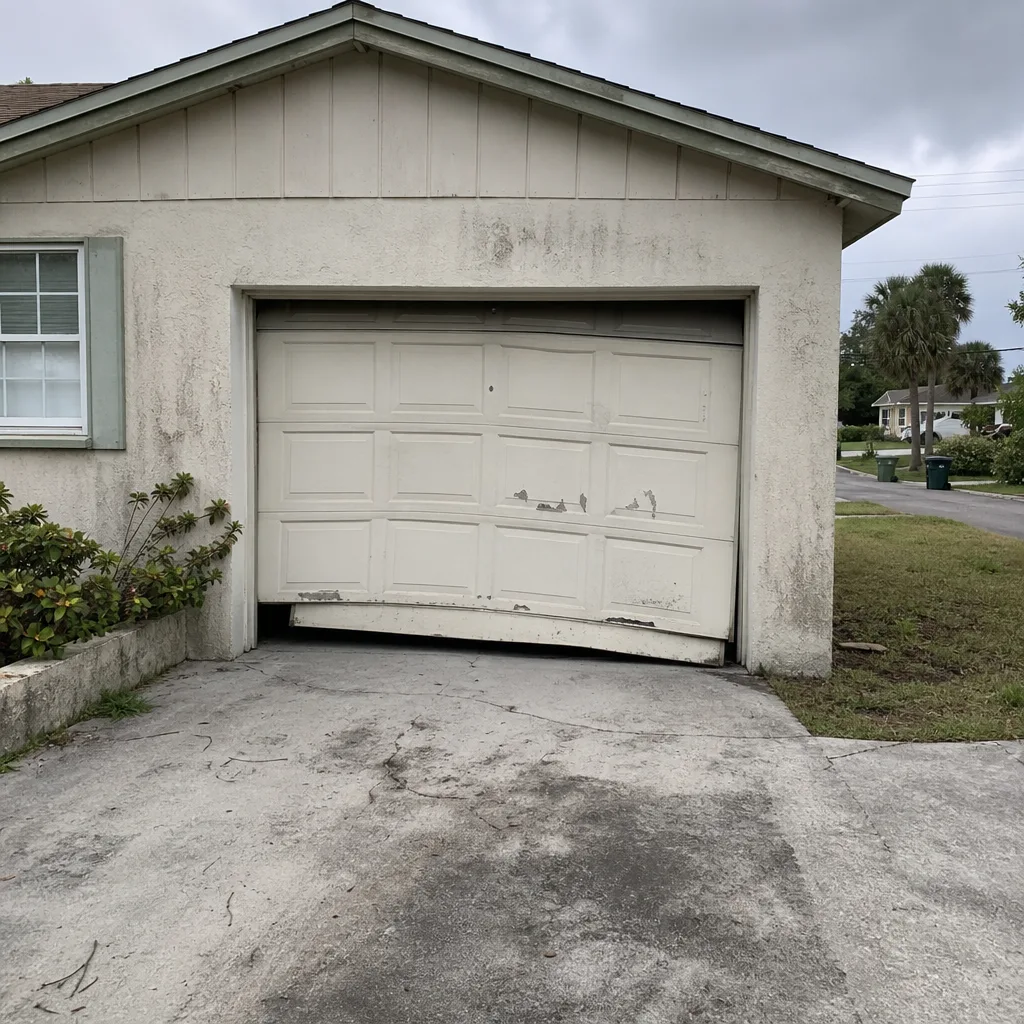 Before
 After
 Before
 After
When to Call a Professional
Some garage door problems are genuinely fine to observe and test yourself: a remote that needs reprogramming, a photo-eye sensor blocked by a stray leaf, or a door that’s slow but otherwise moves cleanly. Others need a trained technician. A broken or partially wound torsion spring, a door that has slipped off a track, a panel bent by a car, cables that look frayed, or an opener that runs but doesn’t lift the door are all situations where DIY work crosses from inconvenient to genuinely dangerous. Our technicians have up to 15 years of experience and are trained to identify what’s actually broken rather than guess at the nearest symptom.
Deerfield Beach Garage Door Repair Co offers free estimates in Deerfield Beach. We answer 24/7 and provide fast dispatch from 7am to 7pm, Sunday through Friday. Call (866) 937-7969 to schedule a visit.
Frequently Asked Questions
Florida doesn’t issue a dedicated garage door contractor license, so the correct credential depends on the scope of the job. Most garage door work falls under a general contractor or specialty structure license, and the business also typically holds a Broward County business tax receipt. Ask for the license number in writing and confirm it on the state DBPR portal before you schedule any work.
Request a Certificate of Insurance directly from the contractor’s carrier, not the contractor, and confirm three things: the policyholder name matches the legal business entity, the general liability policy is currently active, and the coverage explicitly includes garage door installation and repair. Workers’ compensation is a separate certificate and should also be requested.
A single torsion spring replacement typically runs about $200 to $400, depending on door size, spring cycle rating, and access. Most doors have two springs and both should be replaced together, so a pair typically runs roughly twice that. The written estimate you receive before work begins sets the final price; ask for it to be itemized with parts and labor broken out.
Any competent handyman can physically swap the part, but the question is whether they’re trained for the specific hazard. Torsion springs hold hundreds of pounds of stored energy, and improper winding or set-screw tightening can cause serious injury or damage to the door and surrounding structure. Hire a specialist who names spring work as a core service and carries insurance that specifically covers it.
Warranty terms vary by contractor, spring brand, and cycle rating. What matters is that both the parts warranty and the labor warranty are written on the estimate before you sign. Ask for the spring brand and cycle rating in writing so you can compare offers fairly and know what you’re paying for.
We answer 24/7, and crews are dispatched fast from 7am to 7pm, Sunday through Friday. Call (866) 937-7969 and we’ll book the next available opening. Emergency work still requires a written scope and quote before any repair begins.
Not required, but convenient. A specialist who handles both equipment categories can spot interactions between door balance and opener function that a single-trade contractor might miss. If you’re planning a full replacement, ask whether the contractor handles both installation and opener setup.
The Bottom Line
Hiring a garage door contractor in Deerfield Beach is a verification process, not a price comparison. Confirm the license through the state DBPR portal and Broward County records. Request an insurance certificate directly from the carrier and make sure it covers garage door work specifically. Ask the five questions, insist on a written scope, and refuse to start work until you have both the scope and the warranty terms on paper. Price matters, but only after the credentials, the diagnosis, and the written commitment are in place. The cheapest quote on a spring replacement costs more than the most expensive one if the spring fails early or the door drops on a car.
If you’d like a free estimate from a garage door specialist who does this every day, call Deerfield Beach Garage Door Repair Co at (866) 937-7969. We answer 24/7, with fast dispatch from 7am to 7pm, Sunday through Friday. You can also visit our Deerfield Beach Garage Door Repair Co page for the full picture of what we handle.
Written by the team at Deerfield Beach Garage Door Repair Co.